Cold storage isn’t just a standard industrial box. Every square foot of these massive warehouses is engineered as a highly controlled refrigeration and freezer system designed to protect the cold chain under any conditions.
They’re expensive to build, energy-intensive to operate, and mechanically complex, creating one of the highest barrier, most operationally demanding niches in industrial real estate. Each warehouse plays a critical role in food safety, keeping products at the right temperatures as they move from farms and food producers to grocers, restaurants, and consumers.
For Americold Realty Trust (NYSE: COLD), one of the world’s largest cold storage REITs, those demands are exactly why sustainability drives the business model, providing the operating discipline that keeps the cold chain running.
“Cold storage has some of the highest energy loads in commercial real estate,” says Brian Dunn, senior vice president of facilities and engineering. With that much demand, efficiency isn’t optional. Because refrigeration consumes so much electricity, energy performance directly determines profitability, resilience, and regulatory compliance, he notes.
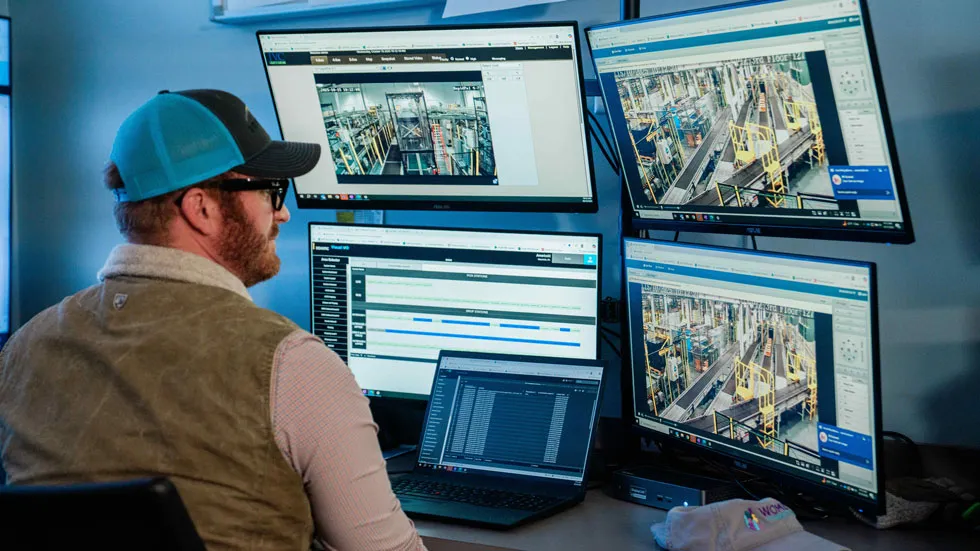
Americold has become a leader by treating power management as a strategic advantage. Through its behavioral operating philosophy and problem-solving culture, the Americold Operating System (AOS), and technology behind disciplined, data-driven operations, the company gains real-time visibility, tighter refrigeration control, and consistent performance across its global footprint. With energy expenses second only to labor, precision energy management is a major driver of cost control.
In 2025, Americold invested more than $23 million in energy efficiency and sustainability improvement projects, including LED upgrades, AI-embedded refrigeration controls, renewable energy installations, and targeted optimization work. The company embeds sustainability and AOS into every site to protect assets, manage expenses, support long-term investor returns, and help their customers feed the world.
A Century of Efficiency
Americold’s emphasis on efficiency and waste prevention dates to its 1903 founding as the Atlanta Ice and Coal Co. “Sustainability isn’t a new initiative for us,” Dunn explains. “At the most basic level, our business exists to reduce food waste.” Last year alone, Americold handled approximately 87 billion pounds of food with a loss rate of just 0.000059%.

Today, the company owns and operates more than 220 temperature-controlled warehouses totaling roughly 1.4 billion refrigerated cubic feet across North America, Europe, Asia Pacific, and South America. Its customers include major manufacturers such as Tyson Foods, Conagra Brands, and Kraft Heinz Co., and major grocers like Walmart.
When it comes to leasing space to third-party operators, Americold’s owner-operator model gives it full control over both the real estate and the refrigeration systems inside. That control matters because in cold storage, how equipment is run and maintained directly affects performance, reliability, and long-term costs.
Electricity is one of the biggest operating expenses in temperature-controlled logistics, and Americold tackles it head-on. AOS delivers consistent, visible, tightly managed energy performance to every warehouse and turns an unavoidable expense into a performance gain.
Dunn is direct about the sector’s demands: “Yes. The loads are high, but Americold manages them extremely well.” He says the company’s operating strategy — powered by real-time monitoring, intelligent controls, and standardized work practices — gives stakeholders confidence and makes the asset class more predictable.
Third-Party Validation
GRESB — the Global Real Estate Sustainability Benchmark — is the primary standard used by institutional capital to evaluate sustainability and resilience across REIT assets.
“GRESB is a benchmark of our leadership, policies, risk management, stakeholder engagement, data quality, and environmental and social performance across our entire portfolio,” Dunn says. “It validates our strategy, the rigor behind it, and the way we embed it into our operating system.”
“The biggest thing GRESB does with stakeholders is give them confidence,” Dunn continues. “It’s not just Americold sharing the data. A third party is evaluating and benchmarking us against our peers, and we come out as a leader.”
In 2025, Americold was named a GRESB Sector Leader for the Americas, ranking it among the highest-scoring industrial portfolios in the region. The designation recognizes strong performance in energy management, emissions reduction, renewable energy deployment, governance, and high-quality environmental data — the areas GRESB uses to evaluate operational performance and long-term resilience.
Americold’s performance goes beyond GRESB. The company has 26 ENERGY STAR certified buildings, 43 facilities with green building certifications, and 203 sites enrolled in the Global Cold Chain Alliance’s Energy Excellence Program. “By far, we’re the leading company within that program,” Dunn says.
Independent Data Assurance
To further reinforce investor confidence, Americold’s reporting is independently assured by Sustainable Investment Group (SIG), which validates environmental data across its global portfolio. Cold storage creates a uniquely complex data environment, says Asa Posner, SIG’s vice president of sales.
“The building is not just a real estate asset; it’s part of a highly controlled operating system,” he explains, with energy use shaped by temperature zones, refrigeration load, throughput, weather, and food-safety requirements.
Refrigerants also make up a far larger share of emissions than in traditional industrial buildings, making the data “very operationally sensitive,” adds Amritpal Virdee, SIG senior ESG consultant. Verification requires confirming that the numbers reflect how each facility actually operates.
Americold manages that complexity through a disciplined operational resilience data program that pulls from utility bills, automated feeds, meter readings, refrigerant logs, procurement records, and even fleet and fuel data.
“The strength of their process is that they treat sustainability performance data as something that needs to be reviewed and tested and questioned and reconciled,” Posner says, “not just something that’s buttoned up at the end of the year.”
SIG’s verification strengthens Americold’s emissions reporting and supports planning for cleaner refrigerant technologies. The company has verified reductions in Scope 1 and 2 emissions from its 2021 baseline and supported Americold improving its CDP rating from a C to a B.
“Americold reports much more comprehensively and with a much higher level of transparency,” says Virdee, noting that the company’s strong data practices are fueling a growing pipeline of efficiency and resilience projects.
Smarter, Real-Time Systems
More than 90% of Americold facilities now capture real-time energy usage data, allowing maintenance teams to compare usage hour over hour and day over day. Unexplained changes trigger investigations into operational inefficiencies, mechanical failures, or equipment operating outside its normal range.
Americold has also invested heavily in AI-enabled refrigeration platforms that incorporate weather data, grid conditions, and utility-rate forecasts. Dunn says when a peak-demand event is anticipated — when power can spike from a few cents per kilowatt hour to $2.50 or even $75 — the system pre-cools rooms and intentionally reduces load.
“Our refrigeration systems are the most energy-intensive part of our whole business,” Dunn points out. “When we shifted from legacy refrigeration systems to more proactive systems with advanced controls, we significantly reduced mechanical stress by eliminating over-cycling, and increasing energy efficiency at the site level.”
Engineering Upgrades
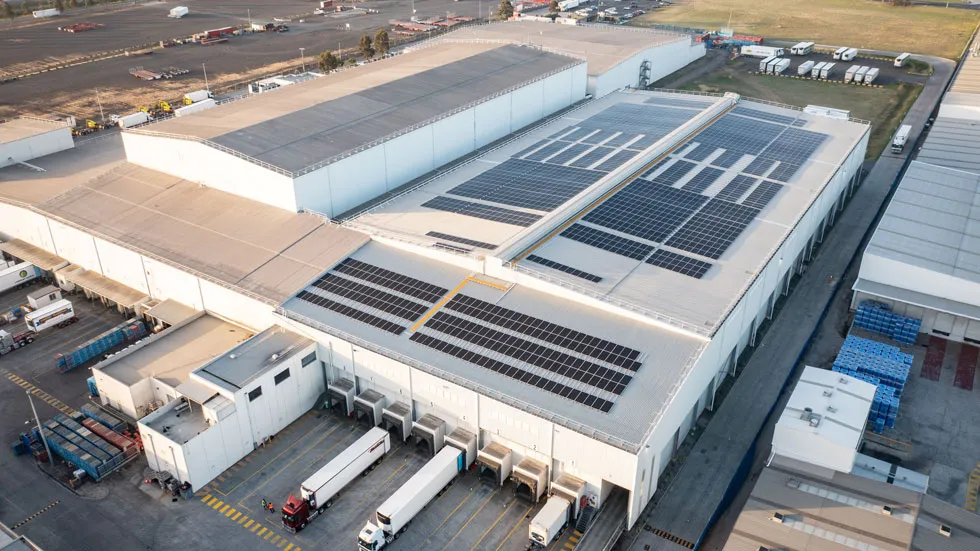
By the end of 2025, the company had 34 facilities with solar installations generating more than 30,800 megawatt hours of renewable power annually, with seven sites installed in 2025 and 11 others in the project stages to begin in 2026.
Inside the facilities, Americold modernized one of the most energy-intensive steps in the cold chain: blast freezing. New fast‑blast systems have cut freeze times from 36 to 48 hours to less than 24. That’s roughly a 30% more efficient process that reduces energy use and emissions while improving product quality.
Culture Meets Data
Americold’s sustainability strategy is data-driven at the top and people-driven on the ground. One example is the company’s “energy waste walks,” with more than 900 completed last year.
Each facility designates an “energy champion” who leads walkthroughs to identify small but meaningful inefficiencies: doors left open too long, worn dock seals, misaligned sills, or unnecessary heat transfer between temperature zones. Dunn says even minor gaps can increase heat load, resulting in over-cycling of refrigeration systems that drive up energy-related costs.
Because Americold has real-time energy monitoring at more than 90% of its facilities, teams can see the impact of their actions almost immediately. The same data flags hidden inefficiencies early, catching equipment that isn’t cycling correctly before it leads to extra energy use or wear.
Strategic Expansion and New Partnerships
Americold’s recent $1.3 billion joint venture with investment firm EQT highlights the strength of its portfolio and accelerates its investment agenda. The partnership will own, operate, and develop temperature-controlled warehouse facilities across North America, with EQT holding a 70% stake and Americold retaining 30% while continuing to run day-to-day operations —keeping the operational control central to its model.
The venture creates one of the largest cold storage platforms in North America and positions Americold to capture increasing demand as food companies and retailers expand their temperature-controlled supply chains. At the same time, the company remains focused on driving value across its owned and operated portfolio, where it applies its operating model and AOS to deliver consistent performance and returns.
Americold is also broadening its customer base. In 2026, PLUS, a Netherlands-based supermarket cooperative, selected the company to consolidate its frozen logistics into a single national platform.
Momentum Toward 2030
Americold’s 2025 Sustainability Report shows strong progress across both its operational and sustainability priorities. The company improved waste diversion, increased emissions avoidance, and maintained strong CDP ratings.
Looking ahead to 2030, Americold plans to expand its intelligent AI embedded refrigeration platforms, grow its solar portfolio, and continuously improve AOS across its global footprint. Sustainability is fully integrated in Americold’s daily operations. It’s not a compliance task or a separate program, but the operating foundation that protects food, enhances asset performance, and supports long-term investor returns.
In many ways, it’s the natural extension of what the company has always done. “For over 120 years, we’ve been preserving food from farm to table,” Dunn says. “It has just evolved over time.”