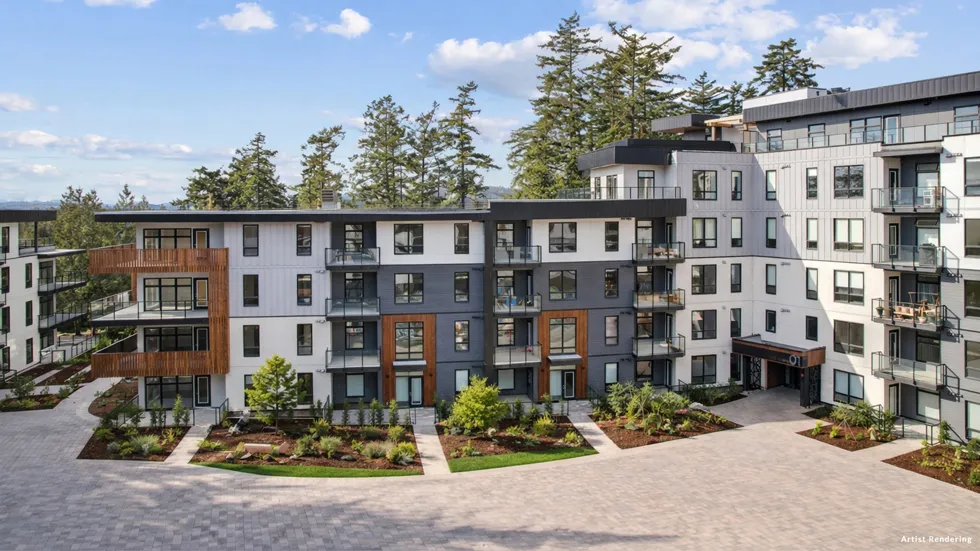
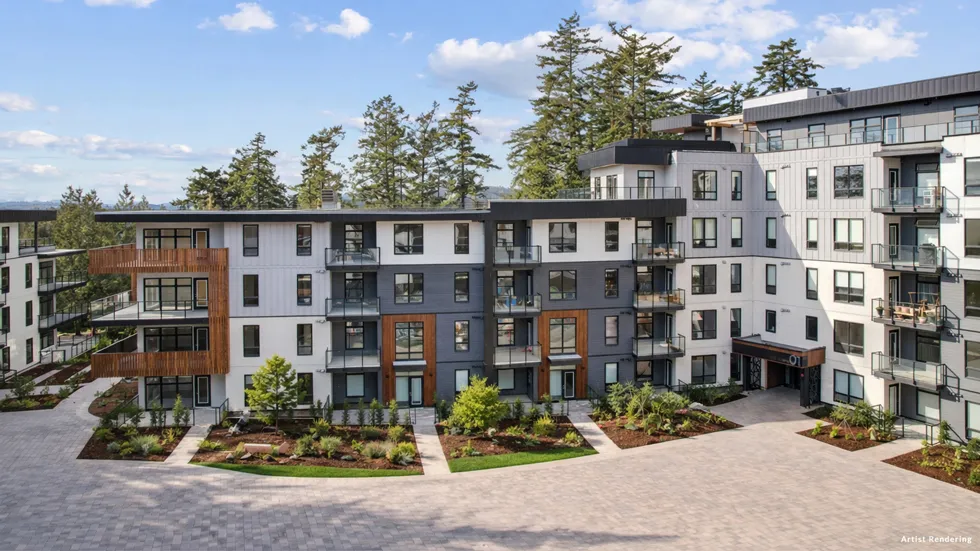
For more than four decades, Calgary-based Boardwalk REIT (TSX: BEI.UN) has prioritized a hands-on operating model that controls costs, maintains high occupancy, and supports ongoing reinvestment – with the collective goal of offering multifamily properties that are among the most affordable across Canada.
Boardwalk owns and operates more than 200 communities with over 33,000 units across five provinces. Its largest concentration of assets sits in Western Canada, which forms the foundation of its operating footprint.
“When investors want exposure to the region, Boardwalk is the go-to name,” says Jonathan Kelcher, director of Equity Research at TD Securities. “About 60% of its portfolio is in Alberta, and roughly 70% is in Alberta and Saskatchewan combined.”
The result is $8.4 billion in assets, consistently strong occupancy, and a portfolio anchored in the affordable segment of Canada’s rental market, where demand has remained particularly robust.
As Chairman and CEO Sam Kolias explains, “Affordability is at the core of our capital allocation decisions.” That philosophy has become Boardwalk’s primary focus in a market facing rising costs and limited supply.
Analysts highlight the same steadiness. “They’ve made good decision after good decision in terms of capital allocation, and they continue to do so,” Kelcher notes. He points to Boardwalk’s cash-flow profile as a structural advantage, explaining that the company maintains a lower distribution and a lower payout ratio than its peers, which allows it to generate significant free cash flow.
That discipline reflects values rooted in Boardwalk’s earliest days.

From Vacant Walk-Up to National Platform
Boardwalk’s story began in 1984, when Kolias and his brother Van bought a nearly empty, deteriorated 16-unit walk-up in Calgary during a severe economic downturn. The property was losing money.
They scraped together their savings, took out a small loan guaranteed by their father, and tackled the renovation work themselves – patching concrete, painting, drywalling, laying carpet, and fixing whatever was broken.
“There was no way we could pay the mortgage if we contracted everything out,” Kolias recalls. “Necessity is the mother of invention.”
Their work ethic traces back to their upbringing as sons of Greek immigrants. “The first two English words we learned were ‘work hard,’” Kolias says. “Our parents worked around the clock.”
Their father, a bricklayer and small landlord, taught them construction early and instilled cost discipline, responsibility, and the belief that housing is personal. He treated tenants like extended family — a value the brothers built into their operating philosophy and their approach to community-building.
This resident-first mindset still guides the platform today. Boardwalk brands its tenants as “Resident Family Members,” reinforcing belonging and supporting retention.
Vertical Integration as an Operating Advantage
What started as a necessity evolved into a fully integrated operating platform. Boardwalk handles painting, flooring, renovations, property management, and procurement internally, giving the company direct control over cost, quality, and turnaround time.
“When we do everything in-house, we’re the most important customer,” Kolias explains. “We buy parts direct, and having parts on hand means we can complete a renovation or a turnover very quickly.”
With fixed costs mostly stable, keeping units full drives margins. Boardwalk’s 97% occupancy demonstrates both its operational discipline and affordability positioning. In a rising-cost environment, controlling materials, labor, and workflow internally has become a clear competitive advantage.
Reinvestment Priorities
Boardwalk has invested more than $1 billion since 2017 to upgrade and rebrand its communities, building out its three-tier platform — Boardwalk Living, Boardwalk Communities, and Boardwalk Lifestyle. In 2026, the REIT is undertaking 16 major repositioning projects to strengthen long-term asset quality and boost resident retention.
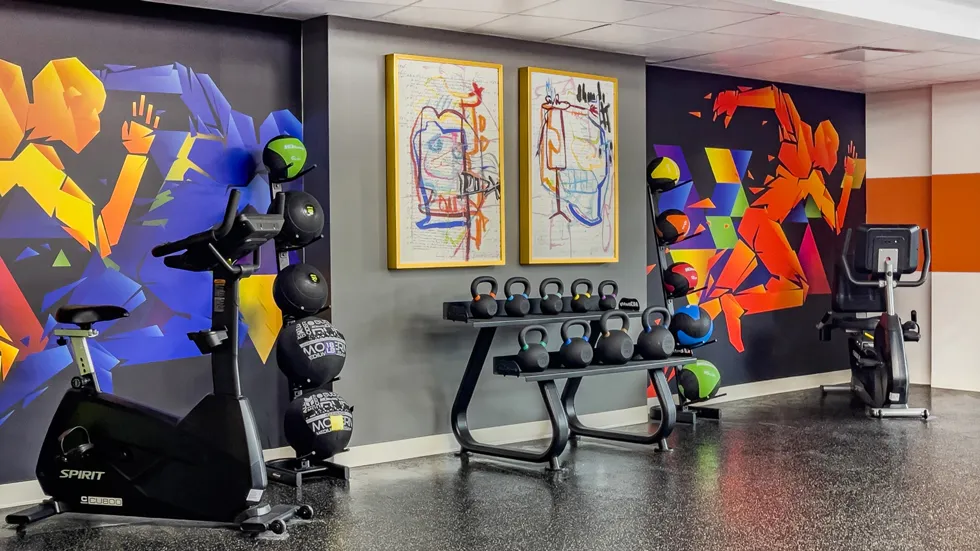
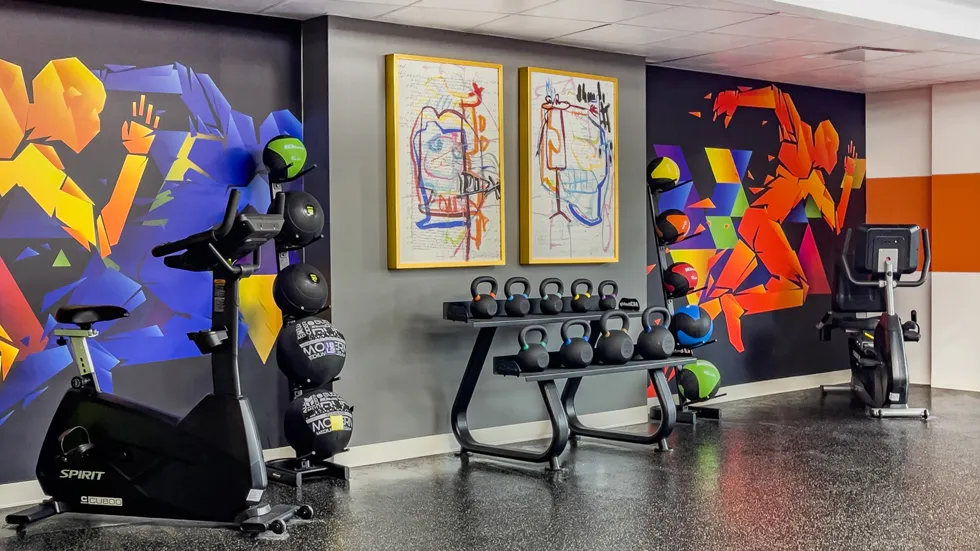
Reinvestment follows a clear hierarchy. “The best-located communities are first,” Kolias says. But for Boardwalk, location isn’t just geography. The company prioritizes proximity to schools, hospitals, and employment hubs, along with the ability to foster real community. Scale also matters, as larger sites support enhanced amenity spaces and more efficient capital reinvestment.
Kolias often looks to hospitality as a model. “We’re blurring the lines between hotel management and property management, inspired by amazing brands like Four Seasons,” he explains. He cites Chef Wolfgang Puck to distinguish service from experience: “Service is the white tablecloth, but hospitality is making you feel important.”
Market Conditions
Boardwalk’s recent performance highlights the strength of Canada’s rental market. Same-property occupancy held above 97% as of its October operational update, fueled by steady population growth and a persistent shortage of affordable housing. That supply-demand imbalance continues to guide the operating environment.
Meanwhile, Boardwalk’s average occupied monthly rent reached $1,653, well below the national average of approximately $2,035. That affordability gap reinforces the REIT’s value positioning and helps protect the portfolio from vacancies at the top end of the market.
However, even strong affordability positioning doesn’t insulate operators from increasing costs.
“Our enemy right now is inflation,” says Kolias, noting that Boardwalk’s in-house work and fast unit turns help protect margins.
Samantha Kolias-Gunn, Boardwalk’s senior vice president of corporate development and governance, adds a broader perspective. “Inflation is a cyclical challenge, while supply is a secular challenge,” she explains. “Our opportunity right now is affordability.”
That opportunity also guides how Boardwalk deploys capital.
Affordability as Capital Allocation Filter
Affordability has always guided how Boardwalk evaluates opportunities. Long before data analytics became mainstream, the Kolias brothers built their own database to identify undervalued assets — starting with the distressed 16-unit walk-up they bought for pennies on the dollar.
That philosophy continues to determine how Boardwalk separates core from non-core. “We buy and build the best — and sell the rest,” Kolias says.
However, the “rest” are far from distressed. These non-core communities often benefit from Boardwalk’s operating model before being sold into the private market at strong valuations. Non-core dispositions now serve as a key funding source for one of Boardwalk’s most significant capital allocation tools: unit buybacks.
By recycling capital from non-core sales into repurchases, Boardwalk converts private-market pricing strength into public-market value creation.
The Buyback Strategy
Boardwalk has completed more than $500 million in asset dispositions for 2026 as part of its accelerated capital-recycling program. In September, the REIT completed its current normal course issuer bid and has repurchased just over 4.0 million units at an average price of $65.26 since its current NCIB (Normal Course Issuer Bid) period began in November 2025.
The company is stepping up repurchases because it sees a rare pricing gap between private and public markets. Private buyers are valuing its non-core assets far higher than where the REIT’s units trade. “The question is who’s right: the public market or the private market?” Kolias asks.
That spread drives the buyback math. “We’re selling our non-core assets at the equivalent of a $95 unit price and reinvesting it back into a $65 unit price,” Kolias says.
Kelcher at TD Securities emphasizes the impact: “It’s accretive to their NAV. It’s accretive to their earnings per share.”
DGAM Co-Ownership
To complement its buyback program, Boardwalk formed a $292 million co-ownership with the DGAM Canadian Private Real Estate Fund in July. The partnership includes four communities in Calgary and Victoria and provides long-term institutional capital while preserving operational control.
Kolias calls the partnership an exceptional fit. “Partnering is really easy. Partnering with the best partner is really hard — it’s called marriage,” he notes. “They’re a long-term, amazing team… It’s humbling they chose us.”
The assets were sold into the co-ownership at approximately book value, reinforcing Boardwalk’s estimated NAV and freeing up balance sheet capacity to pursue accretive opportunities.
Kelcher sees the joint venture as a strategic tool that also generates management fee income, improving acquisition economics. He adds that long-term growth will come from targeted development, joint ventures, and selective acquisitions, but notes that “growth depends on improving cost of capital.”
Discipline, he says, will matter most if market conditions continue to reward asset sales and buybacks.
The Alberta Advantage
Alberta remains the anchor of Boardwalk’s portfolio. The province’s structural advantages — including low energy costs, strong incomes, and resilient employment — give the REIT a significant competitive edge. Kolias points to abundant, affordable energy as the real driver of long-term growth, with migration and job creation across Western Canada adding momentum.
“Our apartment fundamentals in our core markets of Western Canada are the best in North America,” he says. Boardwalk carries that affordability strength into Saskatchewan, Ontario, Québec, and British Columbia.


Kelcher highlights the same dynamics. He notes that Alberta leads the country in weekly average income and is positioned for outsized growth. “Alberta is going to get more than its fair share of investment in Canada, including new pipelines and data centers,” he says.
Those projects bring workers, wages, and long-term employment, directly driving apartment demand.
Culture, Family, and Building a Brand
Behind the numbers is a philosophy that sets Boardwalk apart. Kolias starts with people, not cap rates. “We believe we’re all family when we ‘love always.’ Period,” he says. It’s an unusual mantra for a public REIT, but it has become the cultural backbone of a company that calls itself “Canada’s friendliest landlord.”
Culture, Kolias says, is the most complicated part of running a multifamily REIT. “Culture is a nebulous challenge. It’s the hardest thing we do,” he notes.
He often cites Peter Drucker’s line: “Culture eats strategy for breakfast. Strategy eats operational excellence for lunch, operational excellence eats everything else for dinner.” Even the best strategy, he argues, fails without a strong cultural footing.
That foundation dates back to Boardwalk’s roots as a family enterprise. His daughters — Samantha Kolias-Gunn and Vanessa Kolias-Lotfi — hold senior leadership roles and help drive the mission.
“It’s a family affair, and we work hard together,” says Kolias-Gunn. “Our purpose of ‘bringing you home to love always’ is so pervasive.” She notes that the philosophy extends to executives, employees, and residents.
Boardwalk reinforces this shared purpose through its “Boardwalk Family Forever” (BFF) framework, a cultural shorthand for belonging, accountability, and care.
That cultural focus also guides how Boardwalk views the broader trends driving rental housing.
Looking Ahead
Kolias takes a wider view when asked about the forces shaping Canada’s multifamily market. “We’ve sent folks to the moon and back, but we still haven’t put every person in an affordable place to live,” he says. To him, affordability remains the primary housing challenge globally.
He sees the path forward as demanding but clear, built on discipline, affordability, and a deep focus on residents. These principles guide how Boardwalk positions itself for a rental market that continues to evolve.
Kolias states his goal simply: “Let’s put everybody in an affordable place to live and live in peace.” For Boardwalk, that ambition means staying disciplined, keeping its resident-first approach, and putting affordability at the center of every capital decision.