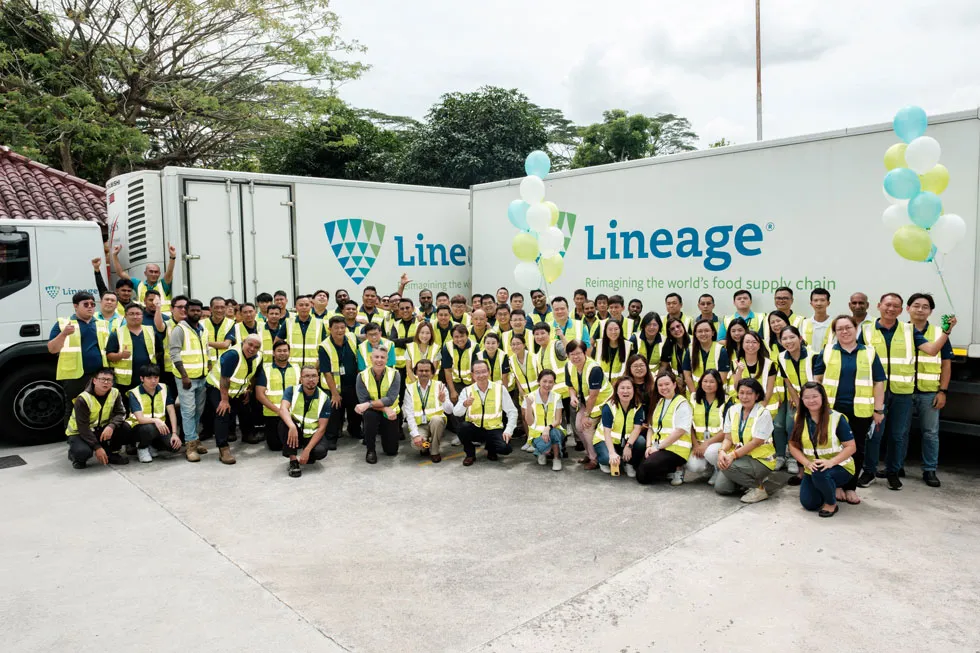
Stock-based equity benefits that are common for executives and senior management are generally far more limited for the broader employee and property-level workforce. Lineage, Inc. (Nasdaq: LINE) is one REIT that’s working to change that.
Following its 2024 IPO, Lineage shared a one-time award of stock or restricted stock units (RSUs) to eligible team members. Named “Starting LINE Awards” in honor of the company’s new ticker symbol, the awards were issued to approximately 22,000 global team members. At the same time, the company launched Lineage Legacies, an ongoing program that gives eligible employees RSUs that vest over time.
According to Lineage Chief Human Resources Officer Kelly Burlage, both initiatives reflect the vision of Lineage’s founders to create meaningful ownership opportunities for the company’s hardworking team members. Specializing in temperature-controlled warehouse facilities, the REIT’s operations span 498 facilities in 19 countries, with approximately 24,000 workers worldwide and 16,000 in the U.S.
Lineage Legacies is designed to give team members a more direct connection to the company’s long-term performance, while supporting their own financial futures. “Lineage strongly believes in fostering a culture of ownership as central to its success,” Burlage says.

The Starting LINE Awards were designed to recognize employees who helped bring the company to its public market milestone. Eligible U.S.-based team members received stock or RSUs, while eligible employees in select international markets received cash bonuses to account for local regulatory and market considerations.
Award levels were based on tenure and applied both to legacy Lineage employees and to team members who joined the company through acquisitions. The follow-on Lineage Legacies program creates an ongoing award program for eligible team members in North America and Asia-Pacific. Last year, approximately 15,000 team members received Lineage Legacies grants, and employees were awarded grants most recently in July.
Thinking Like Owners
Writing in Morgan Stanley at Work’s State of the Workplace 2026 Financial Benefits Study , Kate Winget, chief revenue officer of Morgan Stanley at Work, notes that equity compensation “continues to resonate as a meaningful driver of motivation, and employees understand equity as a way to unlock long-term value for their personal financial goals. This presents a powerful opportunity for employers to link employee motivation and engagement with company success, and education is key in forging this connection.”
For Lineage, employee ownership is certainly not simply a compensation strategy. Burlage describes it as a way to strengthen accountability, collaboration, and performance across the organization. The company wants employees to think beyond day-to-day tasks and see how their individual contributions connect to broader business results.
“The program is designed to help team members share in Lineage’s long-term success and have the opportunity to build a lasting financial legacy of their own,” she says. That ownership message is particularly important in a business where frontline teams play a direct role in service quality, operational execution, and customer relationships.
Lineage’s approach connects equity awards with a wider emphasis on empowering team members to identify opportunities, drive improvements and deliver meaningful results. “This reflects Lineage’s broader culture, where ownership is embedded at every level,” Burlage adds.
There’s a real benefit to having engaged employees who “think like owners,” notes Anna-Lisa Miller, executive director at Ownership Works, a nonprofit organization that partners with companies and investors to provide employees with the opportunity to build wealth through equity ownership. Ownership Works helped Lineage to design its broad-based equity-sharing plan.
According to Miller, a worker takes home the same wage no matter how efficient or productive the company. When he or she has an ownership stake, they understand the financial perspective of what it costs a company to waste resources and that worker might bring ideas to the table. For example, a truck driver could suggest more efficient routes or a technician might suggest more cost-effective equipment.
When employees have a stake in the business, they start to see their day-to-day work a little differently. They’re the ones closest to things like waste and safety, and they often see opportunities that other people in the organization simply can’t see, notes Miller. “When they understand how those things connect to the business performance, they’re more likely to bring those ideas forward,” she adds.
Benefits of Ownership
The IPO-related awards generated excitement across Lineage because they gave employees a tangible way to share in a milestone they helped create. “Team members have expressed appreciation for being included in the company’s success and value the opportunity to share in its growth,” Burlage says. That response has carried forward as Lineage continues to grant additional awards.
From the company’s perspective, the benefits go beyond goodwill. Burlage says the program, combined with other efforts across the organization, has contributed to improved retention and productivity. “It supports both recruitment and engagement by differentiating Lineage as an employer that invests in its people and gives them an opportunity to share in the company’s long-term success,” Burlage says. For a company operating across a large global platform, that message can help connect employees to a shared purpose while reinforcing the culture Lineage has worked to build, she adds.
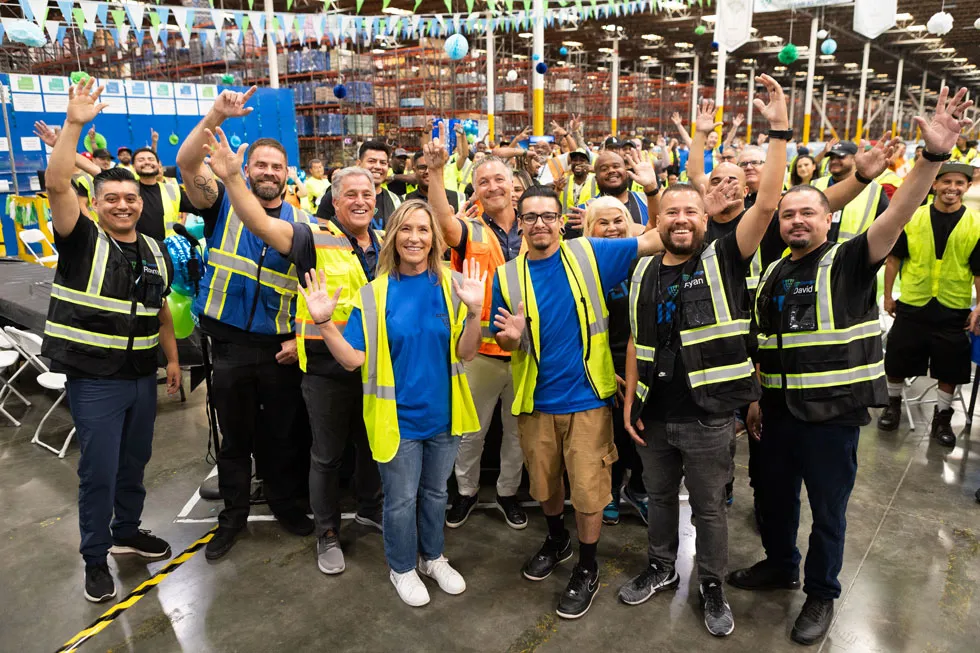
Across industries, there is a business case for shared ownership that includes benefits such as higher retention rates and a decrease in safety incidents. “It isn’t just about giving workers equity. It’s a business strategy to have a deeply engaged workforce who can show up with that ownership mindset and drive the bottom-line business results that an owner would,” Miller says.
Maximizing benefits requires buy-in from the C-suite and clear communication across all levels of the company. Saying you want employees to “act like an owner” can be vague. So it is important to offer specifics, such as encouraging ideas to create efficiency, reduce waste, or improve customer satisfaction scores, she advises.
A New Model for REITs?
Burlage acknowledges that Lineage’s scale and complexity differ from many other REITs. Even so, she believes the underlying principle has broader relevance for the industry. “We believe providing employees with a stake in the company’s success can enhance workforce adaptability, drive productivity, and differentiate total rewards strategies across the industry,” she says.
Public and private companies can apply different models for equity sharing or employee ownership. Generally speaking, employees receive grants of shares based on tenure with an organization. New hires also can participate at a meaningful level and vest at a particular point after reaching certain requirements.
In most cases, those requirements are not too long or onerous, because employers want to maximize the advantage of shared ownership, which is having people think, feel, and act like an owner, which really correlates to business performance, Miller points out. “Employee engagement can feel hard to quantify, but it’s very real, and when it’s missing, it shows up as rising quit rates and lost productivity,” she says.
Sharing Lessons Learned
For REITs that are considering an equity-sharing program, communication and education are essential. Stock ownership can be unfamiliar to employees who have not previously participated in equity-based compensation. Lineage has invested in education and participant support programs to help employees understand how to maximize the value of stock ownership.
Ownership Works encourages companies to support equity-sharing programs with a broader culture of ownership. Building that ownership culture involves steps such as supporting general financial wellbeing of employees through financial education and employer-sponsored savings accounts, for example.
Oftentimes, the workforce is a little skeptical about what shared ownership actually means, Miller notes. “It’s really important to have a strong communication approach with employees, so that they do understand not only the value of equity, but what's expected of them, how the business runs, and how they directly contribute to the bottom line,” she says.
Lineage is also continuing to refine the program through feedback. The company is conducting employee surveys that include questions about ownership mindset, which Burlage says will help measure the program’s impact and guide improvements. For the broader industry, Lineage Legacies offers a notable example of how a REIT can extend the concept of ownership beyond the boardroom and executive ranks.