Following a year of outperformance in 2025, Host Hotels & Resorts, Inc. (Nasdaq: HST) is optimistic that a combination of tailwinds, including an affluent consumer that continues to prioritize spending on experiences, recoveries in key markets, the FIFA World Cup, muted supply, and opportunistic transactions will maximize shareholder returns in 2026.
In an interview with REIT.com, Host CFO Sourav Ghosh explained that results in 2025 were driven largely by strength in transient leisure, which demonstrates that solid demand at Host’s upper-upscale and luxury properties is continuing well beyond the post-pandemic recovery period. “Guests are spending more on food and beverage, they're spending more on golf, they're spending more in the spa,” and there’s no expectation that such spending will let up for the foreseeable future, he noted.
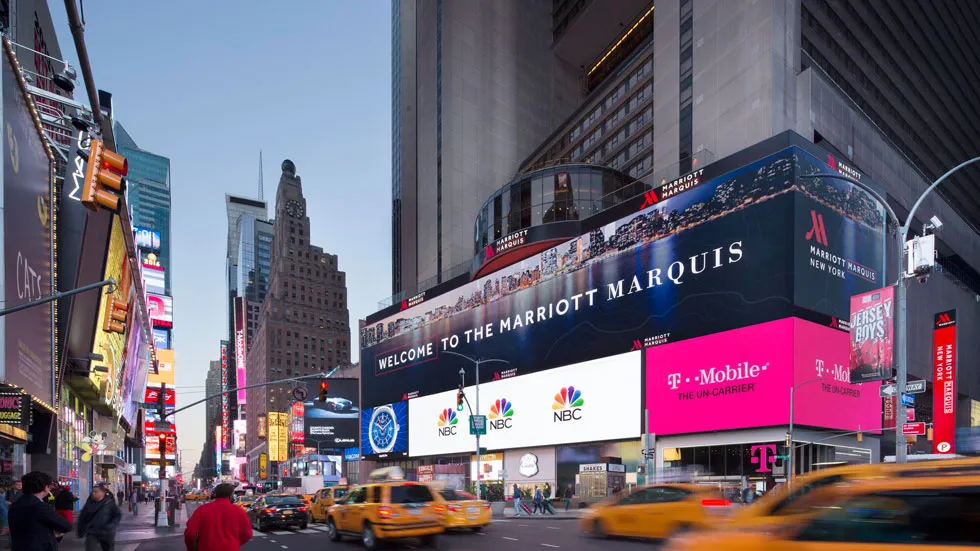
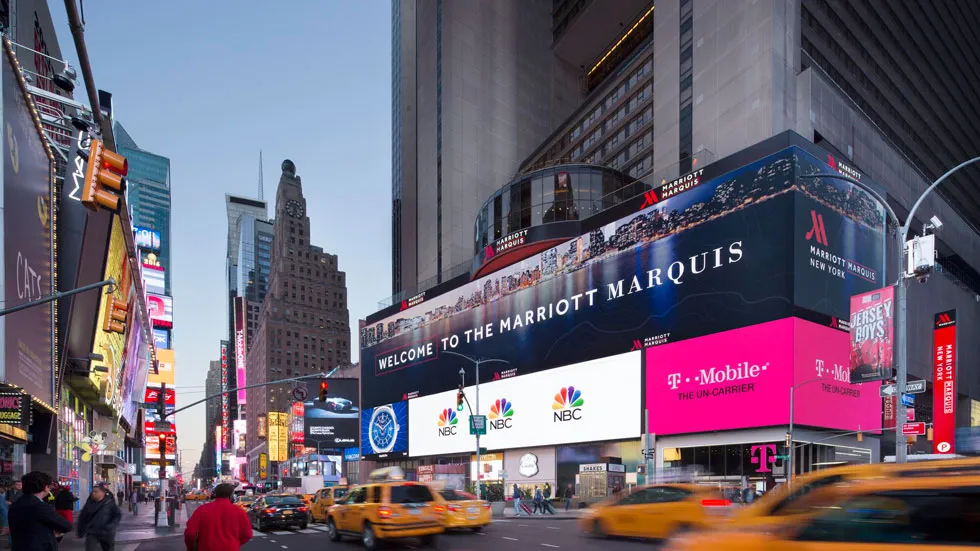
Two markets particularly benefitting from that resilient demand are New York and San Francisco. Host’s performance in New York is now higher than it was pre-pandemic, Ghosh said, with capital investment at the New York Mariott Marquis and the acquisition of 1 Hotel Central Park playing an important role in that.
San Francisco, meanwhile, is seeing a “real resurgence” downtown, according to Ghosh. The recent Super Bowl, he pointed out, is evidence of how “the narrative in terms of what to expect from San Francisco has changed. There is definitely more positive momentum. People are seeing it.”
A recovery in Maui is also underway following the wildfires of 2023, Ghosh noted. Host had expected Maui to deliver about $90 million of EBITDA in 2025 but ended the year with $111 million. “That was one of the reasons for our outperformance as well, and that recovery continues into this year,” he said. Host is expecting to generate at least $120 million of EBITDA from Maui in 2026.

While leisure transient demand is expected to see continued momentum this year, with the World Cup expected to boost revenues in the second quarter, the business transient side is more muted, with expectations that it will likely match 2025 levels. While 2025 rates were about 7% higher than in 2024, business transient volume is still about 20% below 2019 levels. “In our opinion, that doesn't really come back in a meaningful way until you see meaningful economic recovery and certainty around macro dynamics,” Ghosh said.
On the group travel side, rates are currently about 4% higher year-over-year, with 3.2 million group room nights already on the books. Spending on banquets and catering is “still showing significant strength,” Ghosh said.
Meanwhile, Ghosh noted that muted supply over the past few years due to scarce debt capital and difficulty making the numbers work for new hotels, is also playing to Host’s benefit. “Given that low supply, all you really need now is more economic recovery, more certainty around the macro, and real acceleration in GDP and business investment. That should really drive rapid growth across all business segments because you don't have supply to really curtail that,” he said.
Creating Tangible Value
In addition to operating momentum, Host is also focused on how capital allocation decisions are integral to the REIT’s long-term growth strategy.
Since 2018, Host has bought $4.9 billion of assets at a 13.6x EBTIDA multiple and sold $6.4 billion of assets at a 16.7x EBITDA multiple over the same frame, Ghosh pointed out. “However, we have not received any credit from the public markets for our accretive capital recycling.”
Earlier this month, Host announced the sale of the 444-room Four Seasons Resort Orlando at Walt Disney World® Resort in Orlando, Florida and the 125-room Four Seasons Resort and Residences Jackson Hole in Teton Village, Wyoming, for a sale price of $1.1 billion. Host purchased the hotels in 2021 and 2022, respectively, for $925 million.
“For us, it was really an opportunistic transaction to create immediate and tangible value for our shareholders,” Ghosh explained. Disposing of two trophy assets demonstrated to the markets that Host is fully prepared to part with high profile properties within a shorter time frame, he said. “If we can sell something that is meaningfully accretive, we will. Our goal at the end of the day is not to hold onto trophy assets. It really is to maximize value for our shareholders.”
Ghosh said the $500 million taxable gain proceeds from the sale are likely to be returned to shareholders as a special dividend, given the challenges of finding acquisitions that fit Host’s portfolio within the 45-day timeframe for like-kind exchanges. The remaining $500 million of proceeds could be used for accretive acquisitions, share buybacks, continued portfolio reinvestment, or additional special dividends “We will let the market overall settle and see how our stock price performs, and we'll make a decision at that point in time,” he noted.
Assessing Growth Potential
As it examines which assets to reinvest in, versus dispose of, Host’s strategy is to consider the growth prospect of a particular asset relative to the rest of the portfolio, Ghosh explained.
Over the course of 2025, Host reinvested $644 million in its portfolio through capital expenditures and resiliency investments, while working closely with Hyatt and Marriott on transformational capex reinvestment programs.
“It’s not just the market and what markets will grow better relative to our overall portfolio, but it's also where we can extract meaningful value, whether that's through ROI projects, aggressive asset management, or leveraging our enterprise analytics team to identify opportunities,” he said.
Ghosh noted that between 2018 and 2023, Host has undertaken 23 “transformational” renovations in addition to those carried out with Hyatt and Marriott, generating an average 8.7 percentage point RevPAR Index gain for 21 stabilized properties. “Where it makes sense, we will invest transformational capital into our assets, to drive overall bottom-line growth,” he said.
Driving Resiliency
Over the past six years, Host has spent about 8% of annual capex on resiliency across its portfolio, funding upgrades including hurricane-rated windows and doors and floodproofing in high exposure locations such as Hawaii, Florida, and New York. Wildfire prevention measures in Big Sur, California have been another high priority. During 2025, Host completed the purchase and preinstallation of modular flood barriers that exceed FEMA 100-year flood elevation for eight high-risk properties.
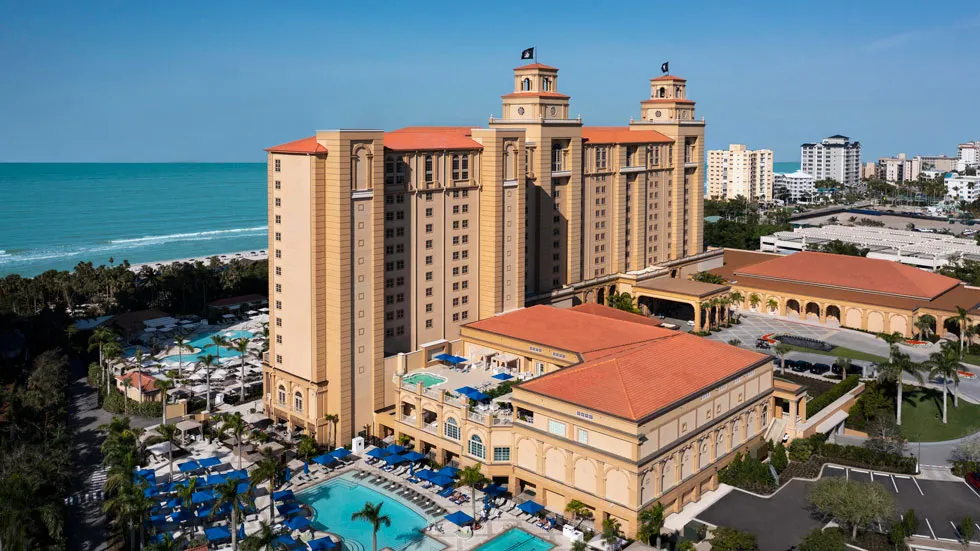
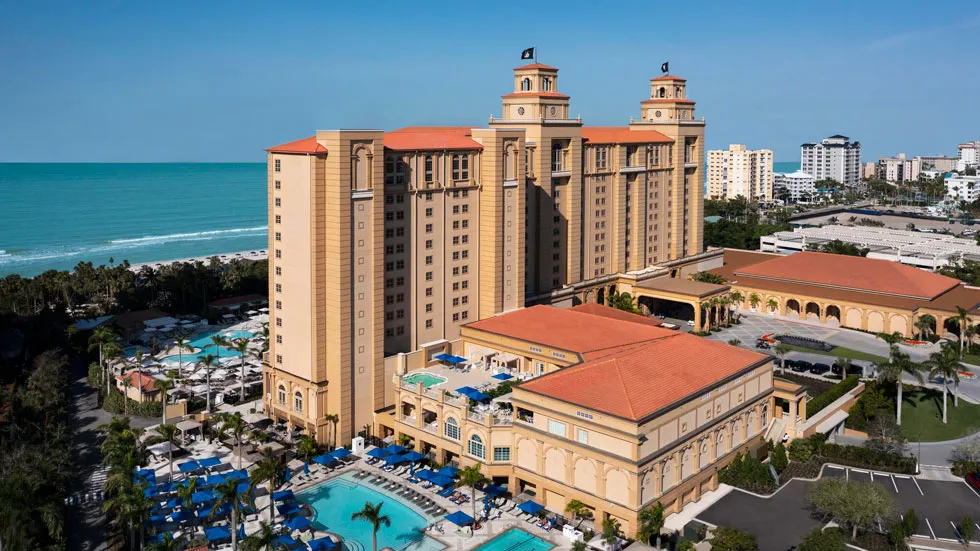
Ghosh pointed to The Ritz-Carlton, Naples as a clear example of how Host is benefiting from its resiliency investments. The hotel closed for nine months after Hurricane Ian in 2022 as Host undertook 10-plus years’ worth of upgrades. When Hurricanes Helene and Milton hit in 2024, the property was only closed for nine days.
“All the resiliency efforts and all the capital that we put in helped meaningfully to really reduce the amount of disruption in order to be able to open the hotel up much sooner,” Ghosh said. “That's a big focus in terms of any decision that we are making—how do we really drive resiliency, particularly at our climate risk assets.”
Enhanced Guest Experience
Meanwhile, as Host continues to prioritize underlying shareholder value, enhancing the guest experience remains a core objective. Ghosh noted that staying at the forefront of technology is integral to ensuring guests spend less time on transactional matters, like check-in, and more time experiencing hospitality.
The advent of AI means that customer relationship management platforms are going to get significantly more sophisticated, Ghosh said. “It’s going to be all about hyper-personalization, personalization not only based on the customer type, but literally who the individual is and what's important and meaningful for them. The more transaction friction that you can reduce, you can focus more on customization for each of your most loyal customers,” he added.