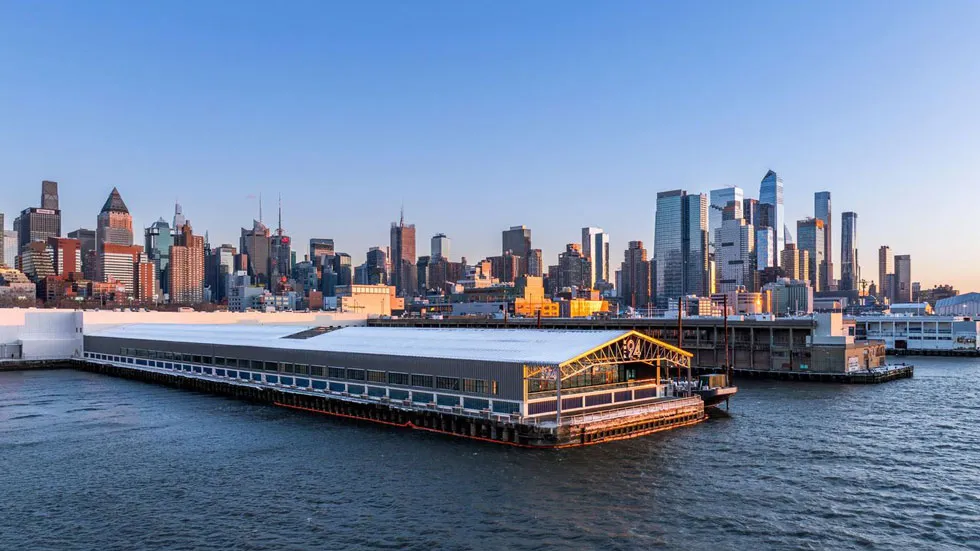
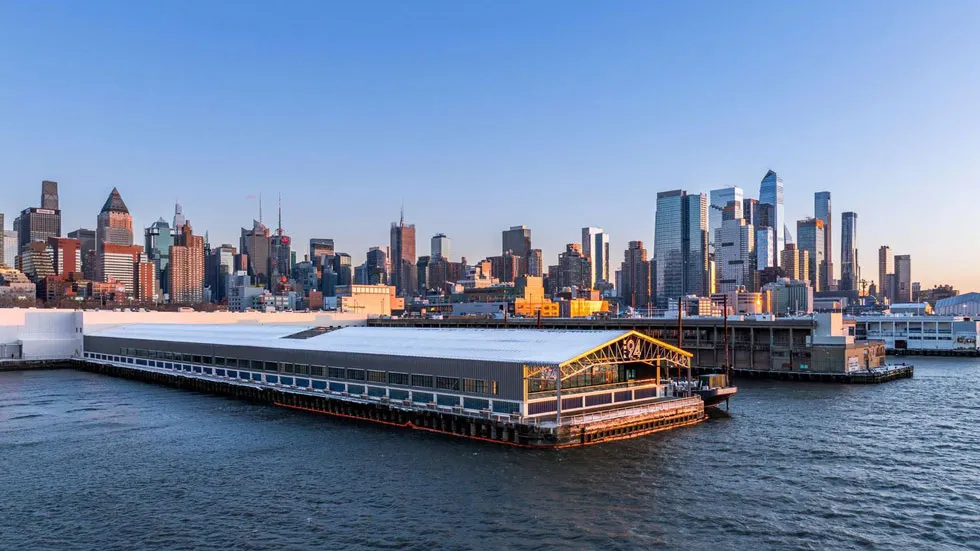
For decades, Pier 94 sat quietly on Manhattan’s Far West Side, first as a shipping terminal, later as a trade show venue, and eventually as a vacant, underutilized asset. Today, the mid-1930s‑era pier has been recast as one of New York City’s most sought‑after production facilities.
Home to Sunset Pier 94 Studios, the site is now Manhattan’s first purpose-built, state-of-the-art film and television studio campus, and a clear example of how institutional capital is driving investment in the city’s film and television industry.
The $350 million revitalization of Pier 94 was led by a joint venture between Vornado Realty Trust (NYSE: VNO), Hudson Pacific Properties (NYSE: HPP), and Blackstone Real Estate, in partnership with the New York City Economic Development Corp. (NYCEDC).
Just months after opening in January, the project is already nearing full occupancy, anchored by Paramount Television Studios. Designed as a high‑volume production hub, the campus also fuels economic activity across the surrounding Hudson River waterfront, supporting local businesses, job creation, and long‑term waterfront activation.
The studio’s value hinges on its Manhattan address, keeping productions in the city’s core rather than pushing them to other boroughs or out of state.
“Certain productions want to be in Manhattan, in a purpose-built facility,” says Barry Langer, executive vice president of development and co-head of real estate at Vornado. “Positioning studios close to where they’re filming allows teams to move from set to location and back far more efficiently—and that’s really the thesis of the whole project.”
Strategic Reinvestment with Staying Power
Each joint venture partner brought distinct value: Vornado’s expertise in complex New York development and public approvals; Hudson Pacific’s operating and technical expertise in premium, custom‑built production facilities, drawn from its Sunset Studios operations in Los Angeles; and Blackstone’s institutional capital and long‑term investment backing.
Together, the joint venture paired institutional capital with public priorities, creating a long‑term production platform that strengthens New York’s position alongside Hollywood and other global production hubs.
Owned by the City of New York, Pier 94 operates under the long‑term ground and building lease previously held by Vornado and now held by the Sunset Pier 94 Studios joint venture. The REIT owns 49.9% of the Sunset Pier 94 studio campus, with Hudson Pacific and Blackstone each holding about 25% each.
Robust leasing momentum has confirmed the strategy. Paramount signed the first lease ahead of the studio’s opening, taking 70,000 square feet to film Showtime’s Dexter: Resurrection for Paramount+, occupying two sound stages and production office space. A second, undisclosed tenant has since signed a lease, bringing sound stage occupancy to 100%.
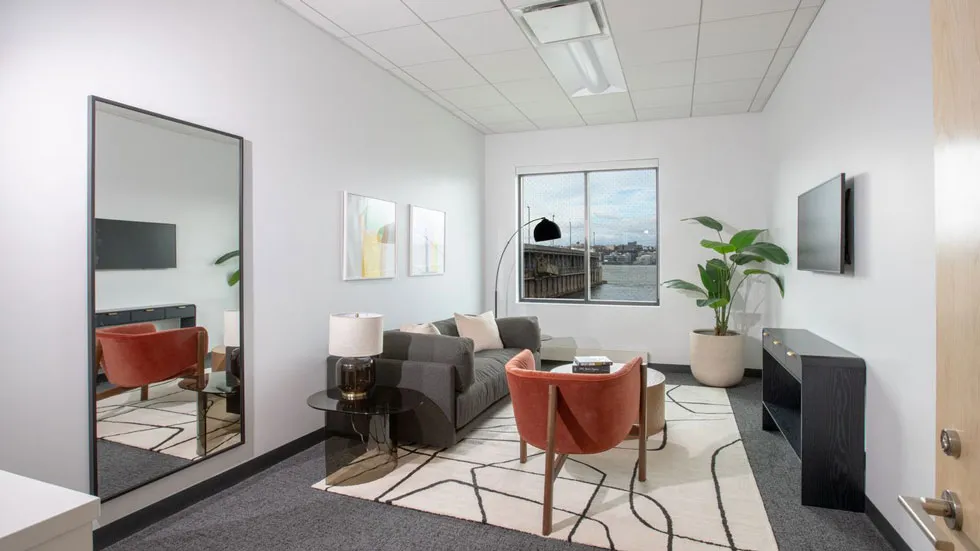
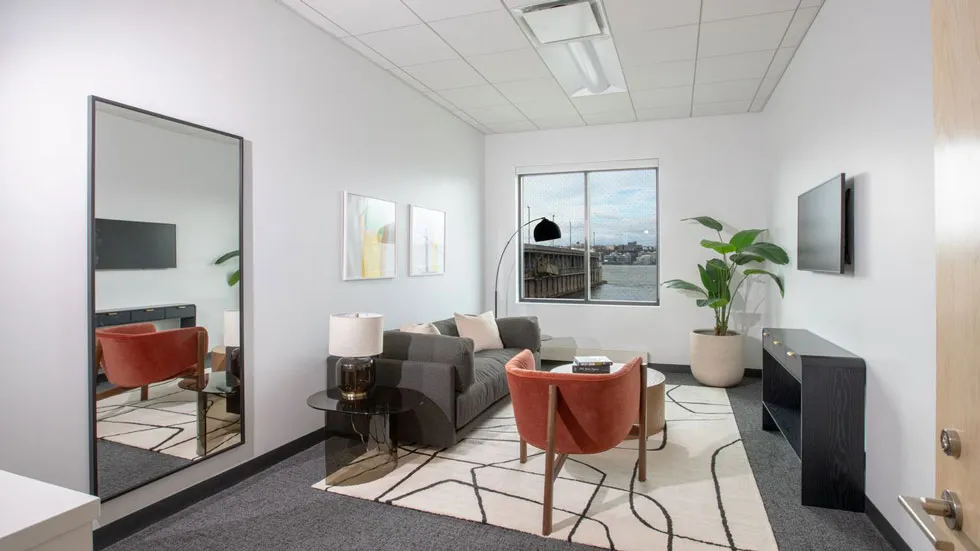
Designed by Gensler, the 232,000‑square-foot campus spans the 1,000‑foot‑long pier and includes six column‑free sound stages with up to 36‑foot clear heights for lighting rigs and large‑scale sets. The project also includes 145,000 square feet of production offices and support space with natural light and river views.
Unlike many of New York’s existing studios, which are often adaptive reuses of warehouse or other industrial properties, Sunset Pier 94 Studios was built from the ground up to meet the technical and logistical demands of modern film, television, and streaming productions.
“Most of the sound stages in New York are in Queens or the Bronx and were originally warehouses, bakeries, or breweries that had been converted,” Langer points out. “Purpose‑built stages eliminate structural constraints such as low ceilings, columns, and limited floor loads, giving productions the ceiling heights, spans, and infrastructure they need to work efficiently.”
Boosting Economic Activity for Local Businesses
While the sound stages anchor the campus, the redevelopment also supports economic activity beyond the studio’s physical walls. Film and television production depends on a broad network of nearby vendors, many based in Hell’s Kitchen and across the West Side, where close access helps keep productions on schedule and on budget.
“Every show is like an army of cast, crew, and staff,” says Sean Griffin, senior vice president of sales and business development at Sunset Studios. “They need meals. They need dry cleaning. They need florists.”
Those needs translate directly into demand for local businesses that already cater to Broadway and New York’s established production community.
“These businesses all kind of play off each other,” Langer adds. “If you walk the streets of Hell’s Kitchen and Clinton, you’ll see the caterers, the lighting and grip companies, and the camera houses that have been serving film, TV, and Broadway for years. This new studio campus is here to keep that whole ecosystem working.”
City officials recognize that dynamic as integral to the project’s value.
“New studios provide gig work for New York City’s freelance community and support hundreds of thousands of good‑paying union jobs,” says Rafael Espinal, commissioner of the NYC Mayor’s Office of Media and Entertainment. They also support small local businesses, including florists, prop shops, lumber yards, dry cleaners, and restaurants, he notes.
That activity is evident well outside the studio gates. “Our goal is that when people in neighborhoods like Hell’s Kitchen see the ‘Made in NY’ production trucks on their streets, they recognize the economic impact these productions have on their community and city as a whole,” Espinal adds.
Option for Non-Production Uses
While film and television production is the priority, Pier 94 was designed with flexibility to accommodate other uses over time. Sunset Studio’s Griffin points to Vornado’s role as key to that strategy. The firm’s New York leasing platform, he explains, has been “very important in unlocking opportunity,” particularly by providing a pipeline of potential non‑production tenants when space becomes available.
Between productions—or in areas not actively used for filming—the site can support complementary uses that fit both the property and surrounding neighborhoods, including immersive experiences, pop‑ups, and brand activations.
“The highest and best use is filmed content production,” notes Griffin. “But having that flexibility matters—even if we haven’t had to tap into it yet.”
Policy‑Driven Demand
Sunset Pier 94 Studios’ quick lease‑up reflects recent policy shifts that have strengthened New York’s film and television production market, including a major expansion of the state’s film and television tax credit. Those incentives now rank among the most competitive in the country, driving demand for Hollywood‑grade studio space such as the Pier 94 redevelopment. Since 2022, more than 30 production facilities statewide have qualified under the state’s expanded production incentive programs, according to Empire State Development (ESD).
“Sunset Pier 94 Studios is a testament to what strategic investment can achieve,” says Emily Mijatovic, downstate director of communications at ESD. “It strengthens New York’s production industry while delivering lasting benefits to the surrounding community.”
She points to recent state actions as essential to that momentum.
“Governor Hochul’s expansion of the film production tax credit and initiatives like Production+, [which support in‑state production], are what make projects like this possible, encouraging major studios to put down roots in New York rather than take their productions elsewhere,” Mijatovic says.
Why Manhattan Remains Essential
New York City is the nation’s second-largest film and television production center, behind Los Angeles. While Manhattan once anchored the industry, most studio development moved outside the urban core to lower-cost areas, increasing travel time, expenses, and logistical challenges. A Manhattan base reduces those inefficiencies, allowing productions to move seamlessly between sound stages, offices, and filming locations.
“There are certain productions where the executive producer, the talent, or the theme of the show really demands being in Manhattan,” Langer says. “For those projects, this location isn’t just convenient—it’s essential.”
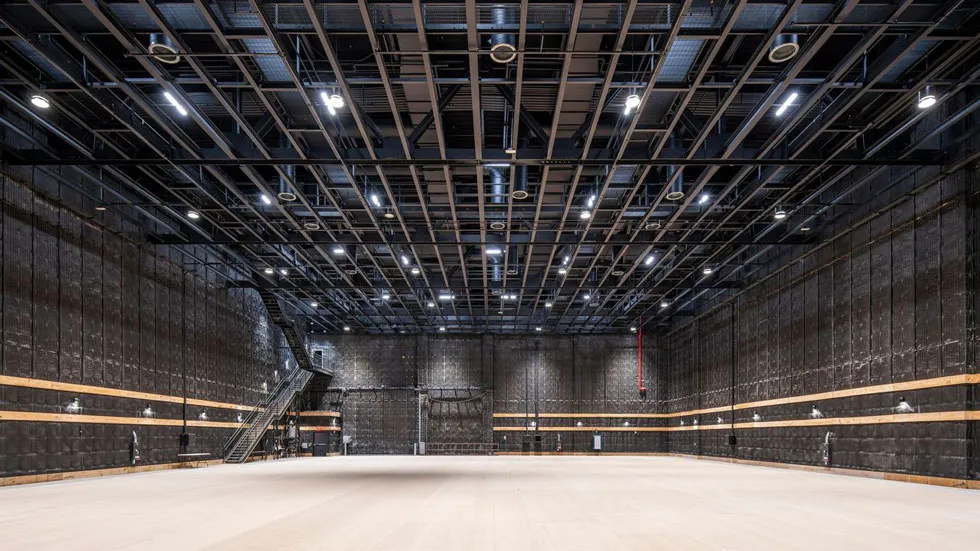
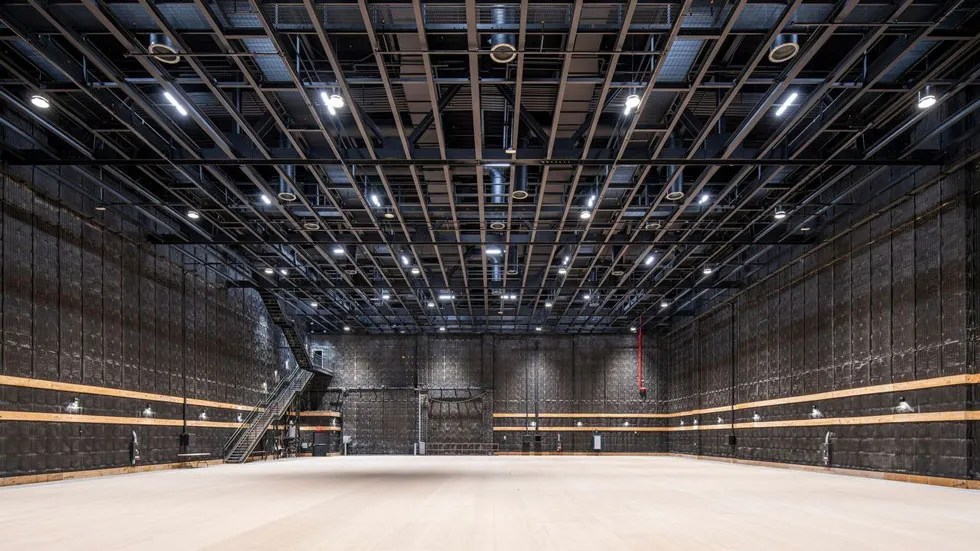
By bringing purpose-built studio infrastructure to the city’s core, Sunset Pier 94 Studios allows current productions to operate with speed and scale, reestablishing Manhattan as a fully integrated production hub.
Rob Harper, head of real estate asset management Americas at Blackstone, said: “We’re incredibly proud of this one-of-a-kind, purpose-built studio in Manhattan and excited to open its doors. We look forward to continuing our partnership with Hudson Pacific Properties and Vornado to bring state-of-the-art film and production space to New York City.”
From Legacy Use to Strategic Pivot
Long known as a trade show and exhibition venue, Pier 94 entered the late 2000s facing an uncertain future. In 2008, NYCEDC tapped Vornado to help reposition the pier, which the firm was already operating through its Merchandise Mart trade show business, hosting events such as the Architectural Digest Show and the Armory Art Show.
Vornado explored a large expansion that would have repositioned Pier 94 as a convention center competing with the nearby Javits Center. However, as the Javits Center expanded and trade show demand softened—compounded by the financial crisis—the long‑term economics of maintaining the pier as an exhibition venue became harder to justify.
It was time to reconsider the pier’s long‑term role.
“We didn’t leave anything unturned,” Langer says. “We looked at entertainment venues, catering halls, retail, logistics—everything.”
At the same time, growth in streaming platforms was reshaping the production landscape.
“The soundstage business was taking off,” Langer notes. “And we started getting approached by people asking, ‘Can we film there?’”
That convergence—weakening trade show economics and rising demand for production space—set the stage for Pier 94’s next chapter.
Assembling the Right Partners
While Vornado had extensive experience with complex New York developments, purpose‑built studio projects were new territory.
“We had never built a sound stage before,” Langer says. “We built 220 Central Park South. We built Moynihan Train Hall. But we’d never built a sound stage.”
The solution was partnership. Hudson Pacific Properties, through its Sunset Studios platform, brought specialized studio expertise, while Blackstone—an established capital partner in Sunset Studios—provided the scale needed to support a long‑term production platform in Manhattan.
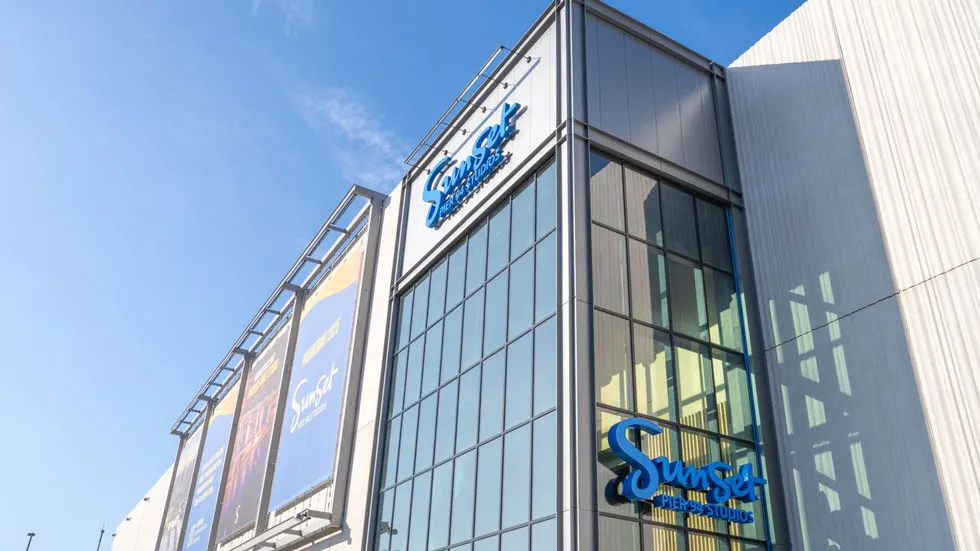
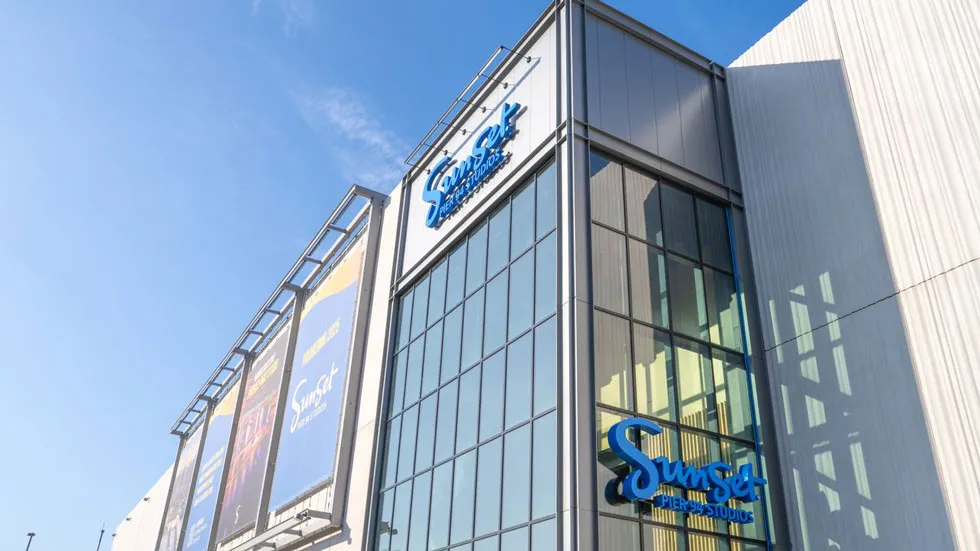
“Our partnership with Blackstone goes back years,” Griffin says. “They’ve developed deep expertise in the studio space and have been very thoughtful, value‑add partners.”
Sunset Studios brought an operating model developed on the West Coast to Pier 94, adapting it for Manhattan. The campus has a service‑oriented approach – more like hospitality than traditional real estate.
“We’re not your landlord; we’re like the concierge at the hotel you’re staying at,” Griffin explains. “Productions run on very tight schedules and budgets, and every show brings a new set of challenges.”
That approach shaped everything from layout to support space, including column‑free spans, high ceilings, extensive soundproofing, ultra‑quiet HVAC systems, and ample space for crews, talent, and set construction.
Workforce, Waterfront, and the Future
Beyond physical infrastructure, the public‑private partnership invested directly in workforce development. In early 2025, Manhattan Neighborhood Network and Brooklyn Workforce Innovations launched programming funded by the project, including industry‑specific training, internships, scholarships, and career case management.
The partners estimate the studio will contribute more than $6 billion to the local economy over the next three decades and support roughly 400 permanent jobs.
Designed to integrate with Hudson River Park, the redevelopment includes approximately 25,000 square feet of new public open space, featuring a 1,000‑foot pedestrian walkway extending into the Hudson River, an 1,800‑square‑foot community amenity space, new public restrooms, and bikeway safety improvements.
“Sometimes the waterfront feels a little underutilized,” Griffin says. “A project like this—which draws people down toward the water—can really help support the surrounding businesses.”
In its second act, Pier 94 has been reinvented not only as a premium studio campus, but as a permanent fixture in Manhattan’s film and television industry, with deep ties to the waterfront and the workforce that sustains it.