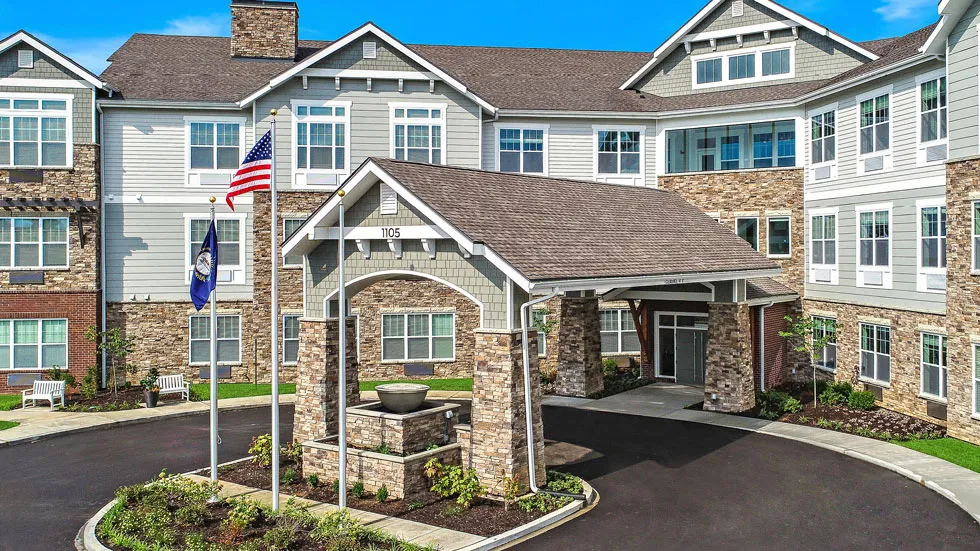
When Brandon Ribar joined Sonida Senior Living, Inc. (NYSE: SNDA) in 2019, the company owned senior housing communities across the country but lacked a unified way to run them. A reset in the company’s strategic direction sought to remedy that, laying an operational foundation that was required for planned future growth.
“My goal when I first came on board was to build an operational platform that could scale,” says Ribar, now Sonida’s president and CEO. “Every time the company would do an acquisition, they would leave a lot of the previous systems in place.”
That platform faces its largest test yet. In March, Dallas-based Sonida completed its $1.8 billion acquisition of CNL Healthcare Properties (CHP), a public, non-listed REIT with 69 senior housing communities. The purchase brought 14 property managers, new markets, and a broader shareholder base into Sonida’s orbit. As of October, Sonida owned, managed, or held investments in 164 communities with more than 16,500 units across 35 states.
The deal marks a turnaround and presents a more demanding task: applying Sonida’s operating methods across a national portfolio. Sonida is a publicly traded C-corporation, rather than a REIT. It is betting that ownership and direct operation of more communities will help improve both the resident experience and the returns from acquisitions.
From Survival to Scale
Sonida and its predecessors have provided senior housing since 1990. Originally known as Capital Senior Living, the company was founded at a time when families were looking for choices between living at home and moving into a nursing home. The goal then, Ribar says, was creating a setting that felt less institutional while offering services, social connections, and access to care.
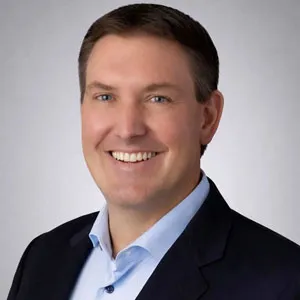
“The philosophy today maintains some of that original goal of creating an enjoyable environment that people feel is like their home,” Ribar says. “We’ve developed and expanded on that as an industry, but also as a company over the last couple of decades.”
The company’s later growth left it with a collection of communities using different systems. Ribar joined as COO in 2019 and became CEO in 2022. Between those appointments came the pandemic, pressure on the balance sheet, and a $154.8 million recapitalization in 2021. Capital Senior Living adopted the Sonida name that year.
The financial realignment had to be matched by investment in people and operations. Sonida built executive and regional leadership teams, connected community systems, and developed the capacity to bring acquired buildings onto a shared platform.
“When did we feel like we had the people to do it?” Ribar says. “Building leadership teams that could handle growth is what set the story up to accelerate.”
Taking On the CNL Portfolio
The CHP purchase supplied more than properties. Ribar notes the acquired company had only 17 employees, while its communities were overseen by 14 outside operators. The arrangement offered Sonida a chance to apply its sales, staffing, purchasing, and pricing systems to buildings that had not all operated under one playbook. It also broadened Sonida’s shareholder base and improved the trading liquidity of its stock, he says.
Sonida did not plan to bring every building under direct management at once. Its team ranked the communities by performance and potential, then chose to tackle some with the greatest room for improvement early. A transition can mean connecting six or seven separate software systems at one property, Ribar says. It also means winning the confidence of the people who work there.
“We keep all of the people in place when we bring a community on board,” Ribar says. “Then we work with leadership at the building to really ensure that they feel good about the support that they’re receiving.”
Sonida’s default is to operate a property itself. Direct control lets it decide where to invest, introduce common systems, and offer employees incentives tied to company equity. But Ribar does not view every outside manager as temporary. He says Sonida is open to longer-term partnerships where a manager brings a clear strategic benefit.
“We’re not saying that we can run every community everywhere in the country better than anyone else,” Ribar says. “There are managers that we are working with that have really good expertise in the regions that they operate in.”
Sonida expects more value from communities it can improve through its own team, while retaining outside partners where their expertise strengthens the portfolio. Management must demonstrate that transitions improve performance without disrupting care.
Making Data Useful on Site
Sonida calls the system behind its operating model SPIN, short for Sonida Performance Insight Navigator. It draws information from sales, staffing, resident care, nurse call, and other systems into a model that community leaders can use each day. Ribar says newer AI tools can help flag unusual changes, but the practical value lies in putting relevant information in front of staff quickly.
“The biggest thing that SPIN allows us to do is see changes in real time that are occurring with the resident health profile, that are occurring with our staffing models,” Ribar says. “It puts that information in front of your team instead of making them dig through dashboards.”
A resident who suddenly needs assistance more often than usual may need a clinical check. A change in movement or behavior can prompt an alert. The system also shows how long employees take to answer a call for help.
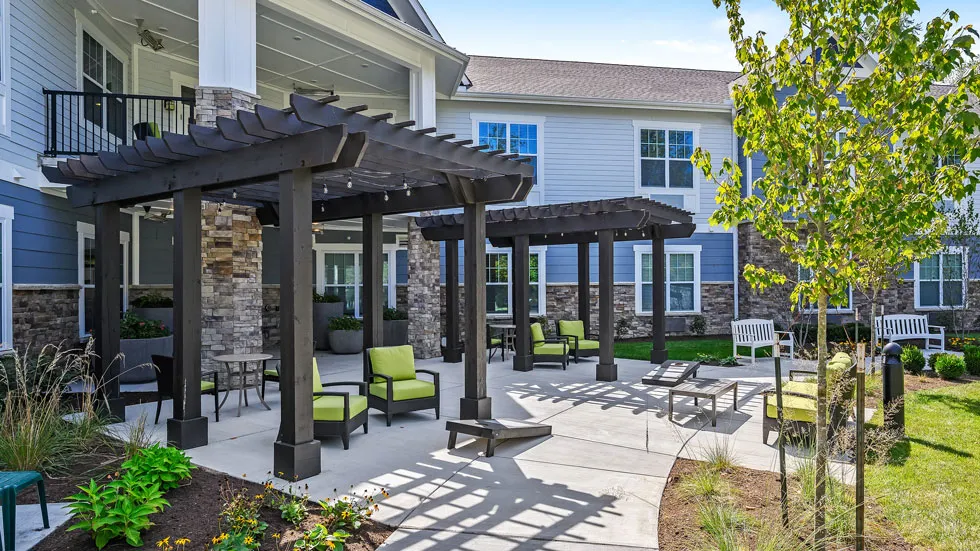
Ribar describes reviewing a month of night shifts and finding that three employees sometimes produced faster responses than four. The difference, he says, could reflect unclear assignments or an uneven distribution of work. The lesson is more specific than cutting a position: managers need to see what happens on a shift before deciding how to staff it.
Sonida also tracks reviews, changes in care needs, and how long residents remain in a community. Ribar regards length of stay as one indication that services meet residents’ needs, while staffing has to adjust as those needs change. The enlarged company must make those measures useful to local leaders without reducing care to meet financial targets.
Occupancy, Rates, and the Resident Experience
Sonida reported second quarter same-store occupancy of 87.8%, up 240 basis points from a year earlier on a pro-form basis basis. Same-store net operating income rose 16.9%. The company also reported a $24.5 million net loss attributable to common shareholders and normalized funds from operations, a non-GAAP measure, of $23.7 million, underscoring the difference between its operating gains and its bottom-line result during an acquisition year.
Ribar says Sonida often buys communities with occupancy in the low to mid-70% range. Filling those units starts with reputation: families read reviews before they schedule a tour, and a prompt response to an inquiry can bring them through the door. The company aims to convert at least 40% of tours into move-ins, he says. As occupancy rises, Sonida tests higher rates for scarce unit types rather than waiting until a building is full.
“The most important thing that drives occupancy is reputation,” Ribar says. “It’s what families rely on when deciding where to tour.” That pricing strategy reflects the market Sonida is pursuing. “We’re not a middle market or a low-income offering,” he says. “We’re in the higher end or the low to mid-luxury.”
Its private-pay communities are generally in affluent suburbs rather than luxury towers in gateway cities. Around Atlanta, Dallas, Orlando, and Tampa, the company looks for population growth, household wealth, and clusters of properties that can share regional resources.
Service must support the prices. Sonida named Anton Nikodemus COO in June, bringing in an executive with extensive hospitality experience. Ribar says residents and families expect more from dining and daily service. Nikodemus also has personal experience as a family member: his father has lived in assisted living for seven years, Ribar says.
“Hotels have two days, four days, six days to figure out the preferences of their customers,” Ribar says. “We get people that live with us for a year or two, three, four, five years.”
Choosing the Next Communities
The same criteria that draw Sonida to an acquisition can argue against keeping an older property. Ribar says communities identified for sale tend to be in small or declining markets, occupy buildings too small to expand efficiently, or depend on reimbursement models outside the company’s private-pay strategy. Existing occupancy alone does not decide whether a property stays.
Atlanta, where Sonida has nine communities, illustrates the other side of its approach. Density can give the company a better understanding of nearby demand and let regional teams support several buildings. Ribar says Sonida is seeking attractive suburban locations with enough income and wealth to support its offering.
The acquisition pipeline remains active. Some opportunities come from owners or lenders dealing with stress, rather than conventional auctions. Ribar believes Sonida can compete for those complicated transactions because it can offer both capital and an operating plan.
“We really like those nuanced deals that require operating capability and being well-capitalized,” Ribar says. “We want to continue to stay very aggressive.”
An Alternative Capital Model
The CHP transaction also brought a different investment model to CNL’s former shareholders. A REIT generally distributes much of its taxable income; Sonida, as a C- corporation, can retain cash for acquisitions and reinvestment. Ribar says accumulated net operating losses can offset taxable income for now. The company presents that flexibility as an advantage, but it still has to show that each use of capital improves per-share results.
Financing remains part of the calculation. In August, Sonida secured a term loan of up to $380 million from Ally Bank, using proceeds to repay its $170 million acquisition bridge loan, an existing $122 million term loan, and part of its revolving credit facility. Its stated goal is to reduce net debt to roughly 6 to 6.5 times adjusted EBITDA. Ribar says a deal must offer an appropriate risk-adjusted return, reduce leverage, and add to FFO per share.
That discipline will be tested as the company adds properties while absorbing CHP’s communities. Its larger portfolio and more liquid stock may put Sonida in front of more sellers and investors. Neither assures that a building’s manager will have better information, that a resident’s call will be answered sooner, or that an acquisition will earn its return. Those are the results that Sonida’s operating model now has to produce at scale.
“That’s going to be our goal—to continue to repeat the model that’s been successful and keep building on the track record,” Ribar says. “An owner-operator can absolutely produce differentiated results in this market.”