In the first quarter of 2026, CoStar data showed that fundamentals across the four traditional property types generally displayed signs of stabilization and positive momentum. Each sector’s ability to maintain or make continued progress in moving toward its equilibrium is anticipated to benefit property operational performance in 2026.
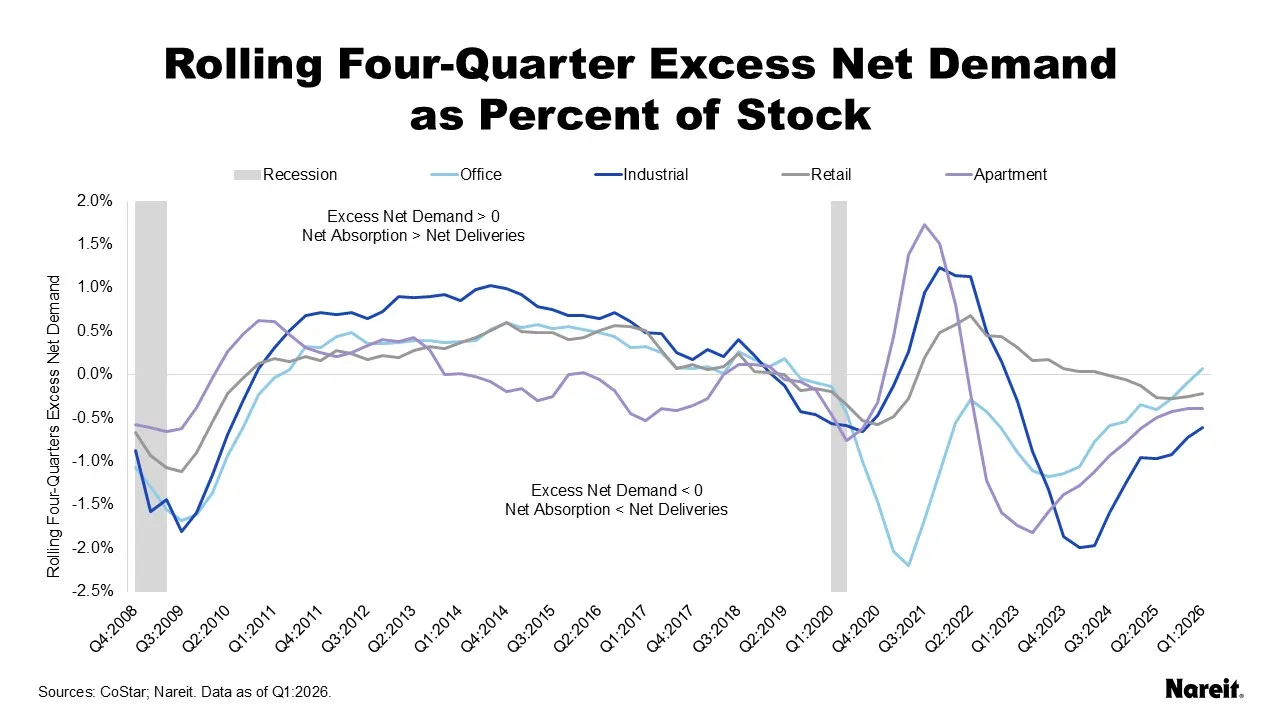
The chart above shows rolling four-quarter excess net demand as a percentage of existing stock by property type from the fourth quarter of 2008 to the first quarter of 2026; it also displays U.S. recessions. Broad office market fundamentals showed that the sector is in the early stages of its space market equilibrium. Although net absorption fell short of net deliveries for retail, apartments, and industrial in the first quarter of 2026, each sector’s upward trajectory indicated continued progress toward balancing demand and supply.
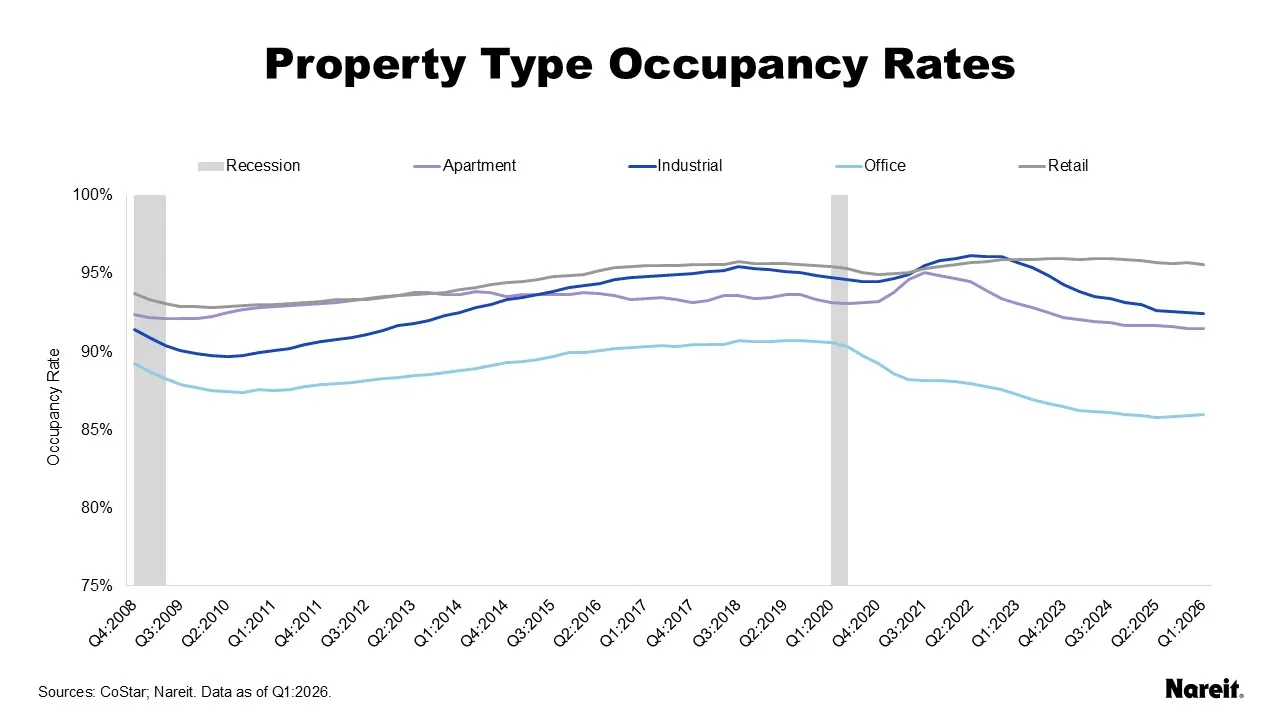
The chart above depicts occupancy rates for the four traditional property types, as well as U.S. recessionary periods, from the fourth quarter of 2008 to the first quarter of 2026. Retail occupancy has generally maintained a consistent level for the past few years; it was 95.6% in early 2026. Industrial, apartment, and office occupancy rates have followed downward trajectories, but have shown recent signs of stabilization. As of the first quarter of 2026, the industrial, apartment, and office occupancy rates were 92.5%, 91.5%, and 86.0%, respectively.
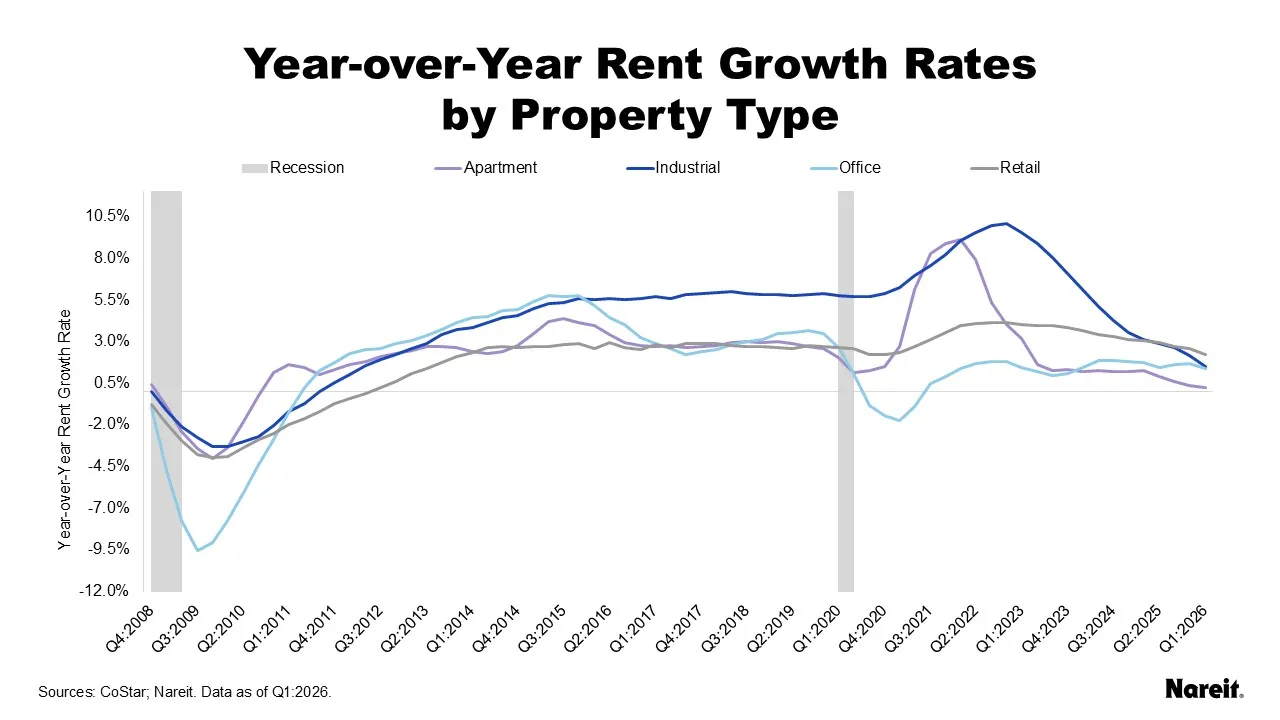
The chart above presents year-over-year rent growth rates by property type from the fourth quarter of 2008 to the first quarter of 2026, including U.S. recessionary periods. Although rent growth rates have been slowing or leveling off, they remain positive across the four traditional property types. As of the first quarter of 2026, the retail, industrial, office, and apartment rental growth rates were 2.2%, 1.5%, 1.4%, and 0.2%, respectively. Despite historically low occupancy rates, office has continued to maintain consistent and positive rental gains.
CoStar data indicate that the office sector is in the nascent stages of its supply-demand equilibrium and the retail, apartment, and industrial sectors are making significant strides toward reaching their respective equilibriums. These positive developments are anticipated to result in rising occupancy and rental rates, broadly benefiting property operational gains in 2026.