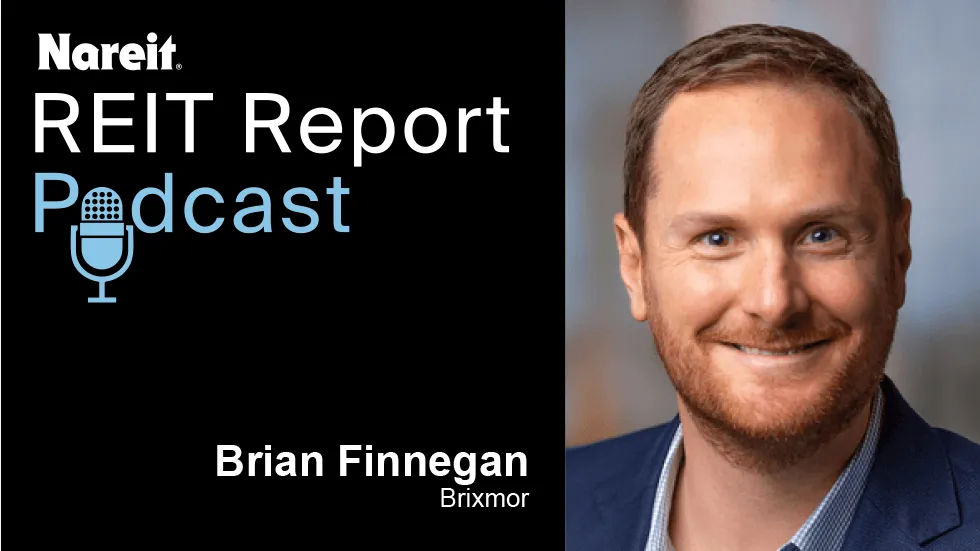
Brian Finnegan, CEO of Brixmor Property Group Inc. (NYSE: BRX), joined the REIT Report podcast to highlight the positive environment for open-air retail—supported by consumer resilience and strong tenant performance—and the REIT’s ongoing efforts to reposition assets to capitalize on those favorable conditions.
Finnegan has served as president and CEO since January and has held a range of positions since joining a predecessor of Brixmor in 2004.
Second quarter results showed continued operational strength at Brixmor, with small shop occupancy hitting a new record.
“I think the success that you're seeing in small shops is really the fact that consumers are just demanding more of the suburbs…they're demanding higher levels of restaurant, of service uses, and we see that across our portfolio… that consumer demand is leading to us being able to attract great operators at our shopping centers,” Finnegan said.
Elevated brands including Sephora, Warby Parker, Williams Sonoma, and Pottery Barn recognize the traffic that high-quality food and beverage and service “are bringing to complement great anchors at our shopping centers. And we've been a big beneficiary of that,” Finnegan pointed out.
Last month, visits to Brixmor centers rose almost 4%, Finnegan said. Retailers are noting the resiliency of the consumer, even if consumers are trading down a little in terms of what they ultimately purchase. At the same time, a focus on value helps Brixmor’s off-price tenants including TJX, Burlington, and Ross Stores, he added.
Finnegan also said Brixmor has brought a record number of outparcels into its active reinvestment pipeline. “We've seen municipalities be much more willing to allow additional density and allow additional building in the parking lots,” he said.
He explained that Brixmor has invested more than $1.5 billion in the portfolio since starting its reinvestment program. “But we're even more excited about what we have coming down the pike. We've got over $1 billion just in what is in our active and future pipeline,” he noted.
Elsewhere in the interview, Finnegan discussed the impact of work-from-home trends on retail, community engagement and local impact, the use of AI and technology in real estate decisions, industry mentorship, and more.