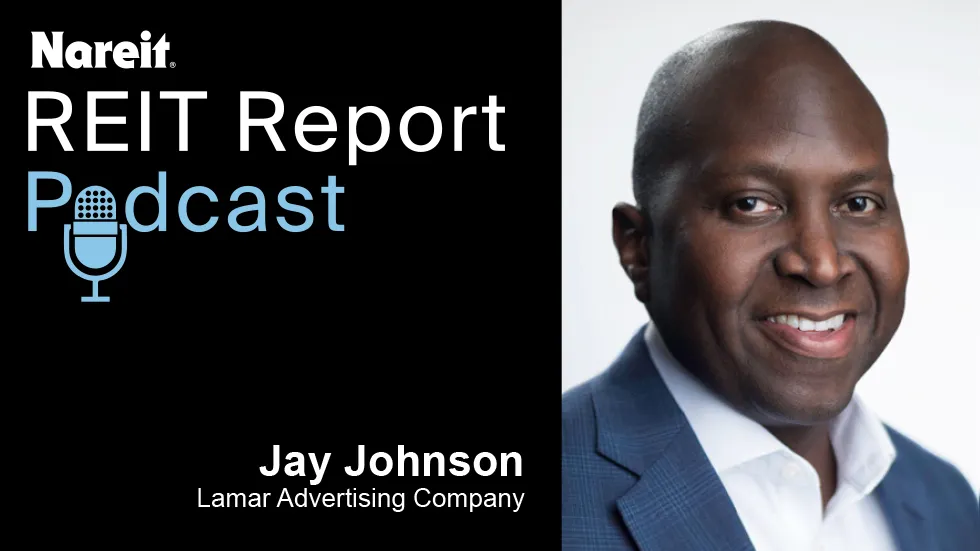
Jay Johnson, CFO and treasurer at Lamar Advertising Company (Nasdaq: LAMR), joined the REIT Report podcast to discuss the state of out-of-home (OOH) advertising, where Lamar sees new growth potential, the importance of serving local as well as national clients, the growing share of digital advertising, the enduring appeal of traditional billboard formats, and more.
Founded in 1902, Lamar has been publicly traded for nearly 30 years and transitioned to a REIT 12 years ago. The company’s longevity is rooted in the ability to remain relevant to clients as the business has evolved from traditional billboards to digital and programmatic advertising, Johnson noted.
Johnson described OOH advertising today as well positioned, with national advertising improving and new categories like pharmaceuticals opening meaningful opportunities. “It’s a great time to be in out-of-home,” he said, noting that even a small share of pharma ad spending could be significant for Lamar.
“That's a vertical and a category that historically has not been able to advertise via out-of-home due to regulatory constraints, but now they have the ability to do so. If we can carve out just a little bit of what the pharma industry spends in the way of advertising, it could be very, very meaningful for us,” Johnson said.
He also emphasized the power of Lamar’s digital strategy, noting that digital billboards make up just over 3% of the company’s units but generate more than 30% of revenue. “We're going as fast as we can with digital conversions. It's probably the best investment dollar we can make on behalf of our shareholders but in all likelihood we'll probably never be 100% digital. While customers really like the digital product, there are customers who really want traditional, static (billboards),” Johnson noted.
Meanwhile, Lamar remains rooted in local markets, with 80% of its business tied to local advertisers across 46 states, Johnson emphasized.
Looking ahead, Johnson said Lamar’s edge comes from three core strengths: its billboard-heavy product mix, broad geographic diversification, and dominant positions in small- and mid-sized markets. Together, those advantages support strong margins and highly accretive acquisitions. “Over the last 30 years, we've really been consolidating a fragmented industry as a public company. And even really prior to that as a private company,” he noted.