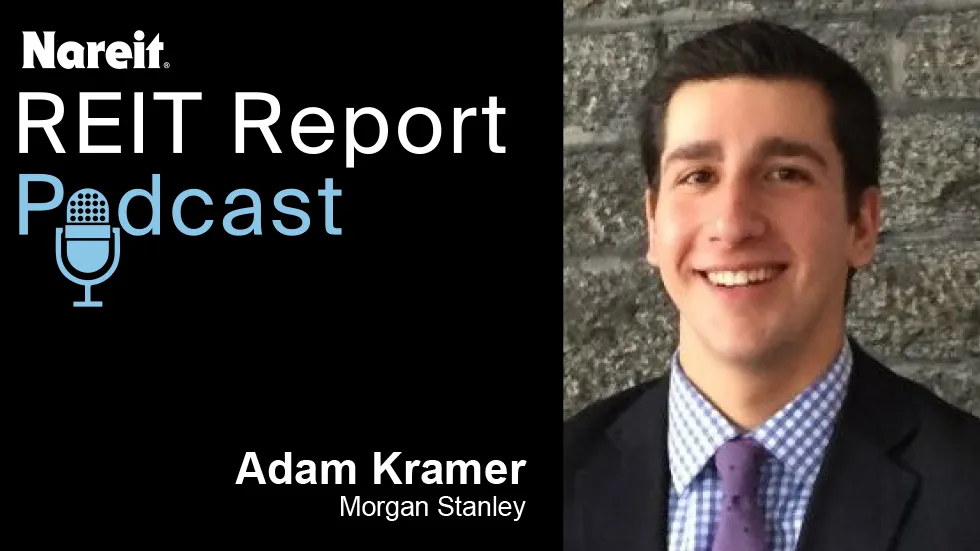
Adam Kramer, vice president of equity research at Morgan Stanley, joined the REIT Report podcast to discuss developments in the multifamily REIT sector.
While factors such as geopolitical tensions, elevated interest rates, and policy uncertainty have contributed to caution in the market, Kramer emphasized that the real focus is on the apartment supply cycle and the pace of demand recovery.
“For us, it's much more about fundamentals, much more about rent growth, occupancy and how that looks in the recovery from supply,” Kramer said.
According to Kramer, the sector is now clearly nearing the end of its historic construction wave, with the national under-construction pipeline at its lowest level since 2013 and housing starts trending toward their weakest levels since 2012.
The Sun Belt continues to face the heaviest supply pressures, though deliveries are declining from prior peaks, he said. Coastal markets currently appear stronger because they face less oversupply and fewer concessions, but Kramer cautioned against viewing them as structurally superior. He pointed out that the Sun Belt still benefits from stronger long-term demand drivers such as population migration and job growth.
A key emerging theme is increasing differentiation within metro areas and even within submarkets. Kramer highlighted Austin as an example, where some southern submarkets have improved significantly while northern areas remain weaker, signaling a return to more nuanced market dynamics after years of broad oversupply.
On operating fundamentals, rent growth remains muted, occupancy is still below historical averages, and concessions continue to pressure NOI growth. However, renewal rent growth has provided stability across both coastal and Sun Belt markets.
Kramer also stressed that multifamily REIT balance sheets remain healthy, with manageable leverage and refinancing exposure. Looking ahead, he expects management teams to focus heavily on supply recovery, capital allocation, stock buybacks, and selective development opportunities.