When Herman Knaust bought a decommissioned iron ore mine in Livingston, New York to convert into a mushroom farm in 1936, he could never have guessed that someday he would be recognized as the founder of a global information management company that preserves data across a diverse range of industries.
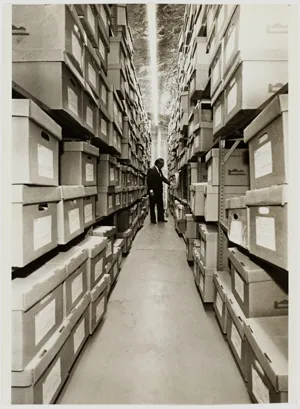
That unusual evolution began in 1945, when Knaust sponsored Jewish immigrants to help their relocation and realized that it was important to have a secure place to store records, says Karen Feldman, senior vice president and chief marketing officer for Iron Mountain Inc. (NYSE: IRM). He built underground vaults to preserve records from wars and other potential disasters and converted his farm to Iron Mountain Atomic Storage in 1951.
While that was the first transformation for Iron Mountain, it certainly wasn’t the last. Iron Mountain, which became a REIT in 2014, has pivoted from paperwork to digitization and additional businesses, including data centers.
In the last quarter century, “Iron Mountain’s leaders have had the ability to recognize market opportunities to reinvent ourselves three times, from physical storage to digital transformation to AI-ready infrastructure,” Feldman says. “Our mission has remained the same: to protect what matters and unlock what’s possible with data.”
Diversification over the Decades
Today, Iron Mountain serves more than 240,000 customers in 61 countries, with 1,350 facilities to manage physical and digital storage. The REIT also has over 1.4 gigawatts of global data center power capacity and is the number one provider of asset lifecycle management (ALM) in North America, Feldman says. Their customers include 95% of Fortune 1000 companies, 100% of major film studios and music labels, as well as government agencies, health care facilities, schools, and cultural institutions.
“Iron Mountain’s transformation has been remarkable,” says Brendan Lynch, co-head of U.S. quity REIT research at Barclays. “After decades of rolling-up small paper storage operators, and establishing itself as the most trusted global platform, the company has added additional high-growth segments.”


It is a common misconception that Iron Mountain is seeing weakening demand in its legacy paper storage business, according to Lynch. “The company continues to aggregate volume and increase prices above inflation,” he says, adding, “customers remain loyal, recognizing Iron Mountain’s track record for keeping data safe.”
In addition, the company has built a suite of solutions to digitize and process documents— essentially scanning documents and sorting them via AI. According to Lynch, Iron Mountain recently won a large contract with the Treasury Department to digitize federal tax forms, and could win similar contracts with state, local, or foreign governments.
Even as Iron Mountain’s document management business shifted from paper to digital – and it still includes a paper element – the core of the business is keeping information secure.
“We’ve built our business on being trustworthy in partnership with our global expertise,” Feldman says. “We consistently get requests from companies to help them manage compliance and regulatory issues, including things like how long to retain certain documents, whether they’re legally obligated to be stored physically or in some specific format.”
The company can optimize storage for companies, for example, by recommending when records can be disposed of.
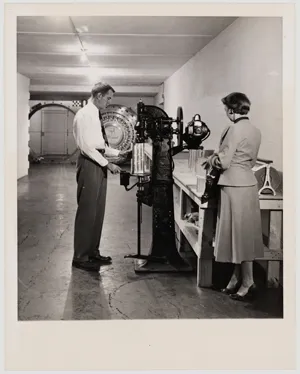
“Up to 30% of data is redundant or obsolete, and there’s a significant cost to that storage,” Feldman says. “We can help companies reduce their costs so they can spend the funds on other priorities, such as AI initiatives.”
While working with companies as diverse as large hospital systems, the IRS, major financial services firms, and leading record labels may seem complex, Feldman says the throughline between these customers is about the mission rather than industry specific.
“We think about our mission as transferring information from a compliance burden to a competitive advantage,” she says.
New Avenues
Beyond document management, Iron Mountain has added two new businesses.
“Iron Mountain has invested in data centers on a global scale and provides ALM on a global scale,” says Jonathan Atkin, a communications infrastructure analyst with RBC Capital Markets. “Both offer different avenues for growth.”
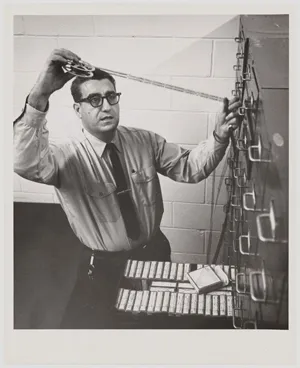
The ALM (asset lifecycle management) business recycles and resells IT hardware, including servers, laptops, and chips, by wiping memory or selling scraps. Atkin anticipates a new wave of growth in this business as data centers go through a replenishment cycle.
The data center and ALM segments are each currently about 10% of revenue, but Lynch expects both to double over the next few years.
“We’re seeing growth across the board in the overall performance of all our streams of business, starting with our core business of records storage,” Feldman says. “Across the entire organization, we grew 16.8% year-over-year in the second quarter. The three areas we consider part of our growth businesses – ALM, data centers, and digital services – collectively grew by more than 50% year-over-year in that same period.”
Meanwhile, AI provides new opportunities for Iron Mountain, such as their InSight DXP platform, which enables companies to transform physical and unstructured assets into active, actionable intelligence with duplicative and outdated information removed, along with sensitive material.
Global Reach
A key differentiator for Iron Mountain is that it operates in so many countries.
“We work with companies of all sizes, but we specialize in working with large global complex companies in highly regulated industries,” Feldman says. “We’re a partner to help them understand the regulatory requirements and compliance across multiple countries.”
Iron Mountain’s “Policy Center” software provides granular rules and regulations, including retention rules around specific types of data and information in individual countries and industries.
“We can use that asset to help our customers, and they can also subscribe to it to integrate it into their technology themselves,” she says. “That helps them optimize their data, so they don’t under-store or over-store from a risk perspective.”
From Preservation to Unlocking Potential
After 75 years of building trust among their clients that their assets will be kept secure and private, in 2015 Iron Mountain moved into a new phase of helping their customers share their cultural and historical assets.
“We work with museums such as the Grammy Museum to preserve their content libraries, but when you keep assets static you only reach about one percent of your potential audience,” Feldman says. “Once you digitize the assets, you can share them more easily and tap into nostalgia.”
For example, Iron Mountain now has a partnership with the McLaren Formula 1 Team, using their AI-enabled digital platform to protect heritage media assets such as team photography, films, and engineering blueprints and activate them to unlock value. Iron Mountain also recently partnered with the Paris Opera to help preserve its 350-year history, starting with digitizing their collection of performance posters.
“McLaren is an example of how once static assets can be leveraged for fan engagement. The benefits across other industries include faster insights and access to information,” Feldman says.
Sustainability at the Core
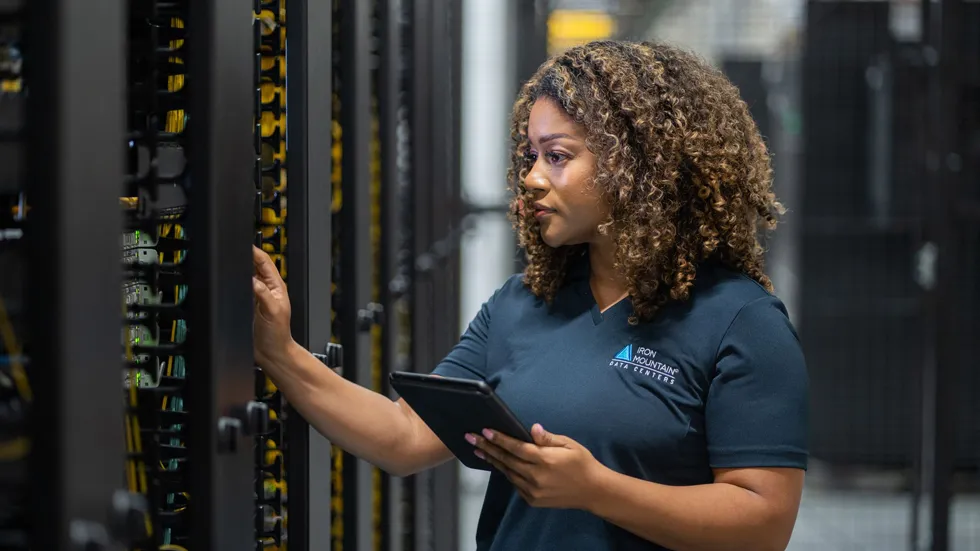
Iron Mountain’s entry into the data center space began in 2017, when it announced the opening of the first of four planned data centers in Northern Virginia. Growth since then has been significant, both in the United States and globally.
Despite the recent backlash in some communities against data centers, Atkin doesn’t anticipate a long-term negative impact on Iron Mountain.
“Most experienced developers like Iron Mountain have a good track record of sustainability and expertise with managing power, water, and land use,” Atkin says. “Besides, no existing data center is likely to get decommissioned because of community opposition.”
Iron Mountain’s global platform gives it an advantage over U.S.-only data center developers and operators, he says. Given the need for data centers, Iron Mountain can get approvals in other countries and in different states and local jurisdictions, Atkin adds. “There could even be a pricing and value advantage to data center owners if there’s scarcity and no risk of oversupply,” he says.
Community concerns about data centers are real, Feldman points out, and offer an opportunity for companies to explain their sustainability commitments and improvements.


“We’ve been developing data centers sustainably since their inception,” Feldman says. “We’re committed to reach 100% net zero greenhouse gas emissions by 2040 and achieve 100% clean energy for our global electricity consumption by 2040.”
Iron Mountain builds all its data centers and other buildings to the BREEAM (Building Research Establishment Environmental Assessment Method) standard. In 2022, Iron Mountain was the first company in North America to earn BREEAM certification for a data center.
“We pioneered the ‘Green Power Pass,’ which allows colocation customers to count renewable energy that they consume through our facilities as part of their Scope 2 emissions,” she says.
In addition, Iron Mountain’s ALM circular economy strategy takes decommissioned hardware assets and refurbishes and resells every part to put them back into development on a global scale.
“Our greatest achievement over the past 75 years is that we don’t stand still,” Feldman says. “Our ability to adapt and innovate is part of our DNA and is how we’ll continue to grow and provide value for our customers and investors.”