
Data centers are readying for quantum computing, the latest demand layer that’s moving out of the laboratory and into the commercial realm. Against a backdrop of rapid technological development, staying ahead of the curve in terms of anticipating the specific requirements to house quantum computing, and adapting to new innovation, will be a key focus for the data center sector going forward.
When reflecting on Digital Realty’s (NYSE: DLR) 20 years of growth, president and CEO Andy Power told REIT.com last year that data center demand over time was like a “layer cake,” reflective of technological advancement. Corporations wanting to harden their IT systems and telecommunications companies fueled early occupancy, and the explosion of mobile applications, cloud computing, and the buildout of artificial intelligence (AI) infrastructure have been driving subsequent leasing waves. Quantum computing is seen as the next chapter in that evolution.
Unlike traditional computing, which processes information sequentially using bits that are either 0 or 1, quantum computing harnesses “qubits” that drive multiple simulations instantaneously. In 2023, Google’s quantum system solved a problem in seconds versus the estimated 47 years it would have taken the world’s most powerful supercomputer, and quantum speeds continue to increase.
Practically speaking, quantum computing solutions will soon be available to a wide range of users. Some of quantum computing’s most anticipated use cases include identifying cybersecurity threats at financial services firms, hastening drug discovery within the pharma sector, and optimizing supply chains in the logistics industry, just to name a few. Last fall, HSBC proclaimed that quantum computing had improved predictions on how likely a bond trade would be filled at a quoted price by 34% versus current industry techniques.
Demand for Specialized Real Estate
The thinking is that while some companies will harness the technology through their own private systems, most firms will access solutions through third-party service providers housed in data centers, similar to AI, cloud computing, or software-as-a-service applications.
In either case, with quantum computing just emerging, it’s virtually impossible to grasp the technology’s full potential, points out Chris Sharp, chief technology officer for Digital Realty, which owns more than 300 data centers worldwide. But he expects the innovation to eventually drive a meaningful amount of data center occupancy.
“We’ve been anticipating the commercialization of quantum computing for some time, and we’re pretty excited about how it’s evolving,” he says. “Like every major computing shift, whether it’s cloud computing or AI, quantum computing is expressing itself as a demand for specialized real estate.”
While it’s difficult to pinpoint quantum computing’s overall influence on data center demand, Andrew Batson, global head of data center research with JLL in Chicago, estimates that it could be as much as 10% in the next 10 years. By comparison, Goldman Sachs projects that AI’s share of the overall data center market will double to 30% through the end of 2027 alone.
But similar to the development of AI over the last 15 years, the type and number of quantum computing applications being pursued in 2035 are likely to be much more expansive than those that are being considered today, Batson adds.
“The technology is moving quickly. Most of the leading quantum organizations are targeting 2028 to 2030 for commercialized products,” he observes. “But the actual uses and benefits of quantum computing are still to be determined.”
Grand Growth Projections
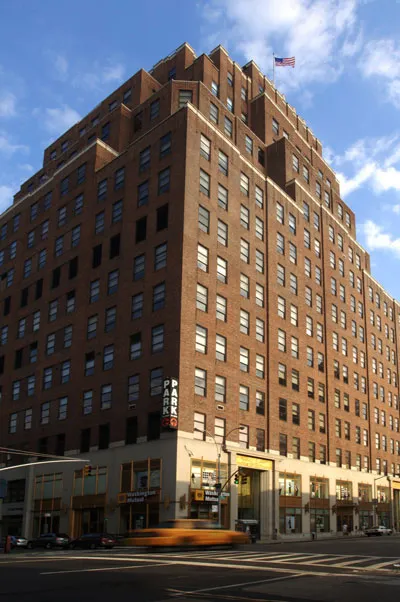
To date, quantum computing has been deployed in about two dozen data centers worldwide, Batson says. Among others, Digital Realty and Oxford Quantum Circuits, a provider of quantum computer services based in London, announced last fall the launch of a quantum-AI data center in New York City at Digital Realty’s JFK10 property.
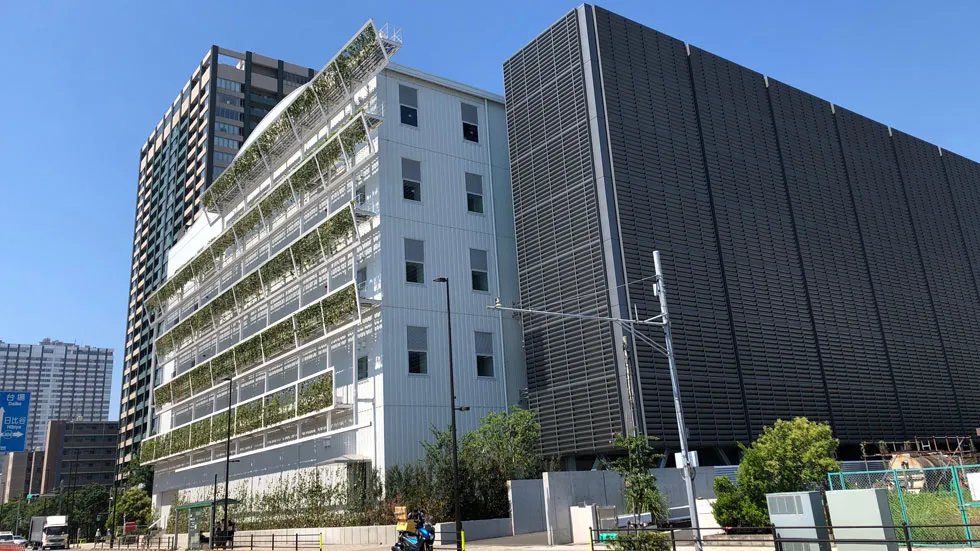
Oxford Quantum also installed a quantum computer in Equinix, Inc.’s (Nasdaq: EQIX)TY11 Tokyo International Business Exchange (IBX) data center in March 2023. Meanwhile, in a more specialized setting, PsiQuantum, a quantum computing firm based in Silicon Valley and backed by Blackstone, is building a $1 billion quantum computer to anchor the Illinois Quantum and Microelectronics Park on a former U.S. Steel site in Chicago. The 128-acre project is scheduled to open in 2028.
Quantum computing solutions could generate $100 billion in revenue in 2035, up from less than $750 million in 2024, according to a JLL report issued in 2025 that Batson co-authored. Similarly, venture capital, private equity, and other investments in the sector are expected to increase to $20 billion annually in 2030, a roughly 10-fold increase over the amount in 2024, JLL reported, which supplemented its forecasts with data from Pitchbook and McKinsey.
In addition to quantum providers like PsiQuantum and Oxford Quantum that are less familiar to the general public, players in the nascent industry include household names like Amazon, Microsoft, and Google, Batson notes.
Whether quantum computing fulfills or surpasses current growth expectations depends on how effectively it moves from the lab to commercialization. To some degree, that depends on the technologies and architecture quantum providers adopt.
Even as they prepare for the transition, many quantum computing providers are still researching and experimenting with more than 12 different hardware approaches, or modalities, that can influence speed, stability, error rates, and other performance measures in various environments, says Petrina Anne Steele, global lead for emerging technologies at Equinix, an owner of 280 data centers across six continents. A few modalities include superconducting materials, atoms, photons, and diamonds.

The different modalities will dictate a quantum computer’s size and containment requirements. A superconducting quantum computer typically resembles a chandelier of roughly two by two meters, for example, but quantum-as-service providers focused on atoms are trying to figure out ways to fit the equipment into standard 19-inch server racks, she says. They also are focused on optimizing as well as simplifying customer access to the technology.
“It’s a big jump from the lab to an enterprise environment, but that’s going to be categorical for quantum providers to have a viable business model moving forward,” Steele says. “So they are building towards being able to put quantum computers into data centers, because they know that’s the only way they can scale their technology for commercial use.”
New Kind of Cold
Robust power supplies in data centers also suit quantum computers, which consume an amount of energy that’s on par with AI, cloud networks, and other occupiers. Cooling is another matter.
Data centers typically aim to maintain temperatures between 64 and 81 degrees fahrenheit, although the range is wider for specific periods or certain equipment, according to Equinix. But quantum computing technologies require cryogenic cooling to keep temperatures around a negative 460 degrees fahrenheit, or absolute zero. Some industries like health care, manufacturing, and energy are already harnessing technology to deliver the deep freeze.
“Cryogenics creates more complexity,” Batson explains. “But cryogenic technology is out there, so it will just have to be applied to a new use.”

Digital Realty has introduced new techniques, like liquid-to-chip cooling, designed to keep operating temperatures extremely low for AI and other high-intensity workloads, Sharp points out. The REIT is taking a similar approach to cool quantum computers. Just as important, he says, is the ability to shield the sensitive quantum equipment from vibrations, noise, and other disturbances that create calculation errors.
“Quantum computing requires a little different environment than what you need for AI or other applications today,” Sharp says. “But we can support that, whether it’s with a cage, a room, or an entire data hall. Whatever the form, we then apply the cooling technologies.”
State of Constant Change
Future advances in AI and quantum computing could disrupt not only how companies do business, but also the requirements of data center tenants. Researchers at the University of California Los Angeles and University of California Riverside, for example, are working on a quantum system capable of operating at room temperature.
Meanwhile, two Silicon Valley AI accelerators, SambaNova and Groq, are bringing faster, air-cooled chips to the market that are driving the ability of AI to make decisions based on new data, or AI inference, which is the next step after machine learning. These innovations keep data centers focused on how to adapt to constant change in the industry, Steele says.
“We work closely with providers, and depending on their technology and architecture today, we figure out how to best house them,” she remarks. “But we’re also starting to ask them, ‘What do you think you will need in three years?’ and 'how can we best optimize and simplify access for your customers and partners?'”