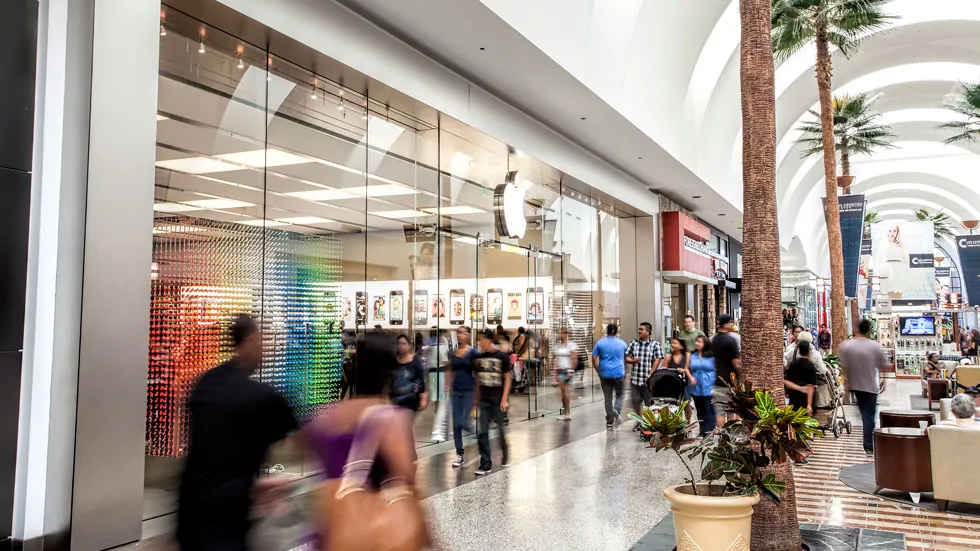
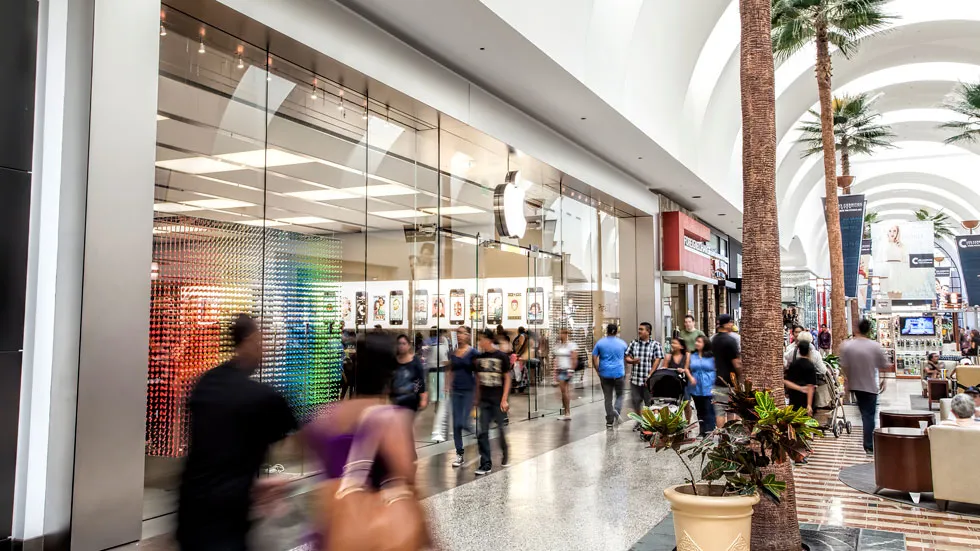
Retail REITs own, lease, and manage retail real estate and rent space in those properties to tenants. Properties include shopping malls, strip centers, grocery-anchored shopping venues, and power centers that feature big box retailers. While the growth of ecommerce sales and uneven consumer spending remain long-term headwinds, brick-and-mortar retail tenants continue to show momentum.
REITs are well-positioned in the retail sector, controlling approximately half of the mall asset value in the U.S. Opening announcements for new stores currently outpace those of closures, which reflects healthy tenants. Existing retail centers are also benefiting from tight supply due to limited ground-up developments. Despite the strong performance of ecommerce, physical stores are seen as complementary, offering in-store fulfillment and convenience.
Michael Knott, head of U.S. REIT research at Green Street, says that in recent years, retailers have been “recommitting to the importance of high quality brick-and-mortar space in their corporate strategies.”
Green Street assigns grades to U.S. mall providers based on tenant mix, productivity, location, and condition. The best malls are assigned grades of A- or better, i.e., A++, A+, A, and A-. Over 25% of malls are A-rated and they account for approximately 80% of total mall value. The typical mall in the early 2000s focused roughly 75% of its inline gross leasable area on apparel tenants. More recently, since the 2020s, the tenant landscape has diversified to make way for entertainment and food & beverage offerings, with apparel comprising roughly 45% of the area.
Knott points out that tenant bankruptcies have not been as problematic or as frequent as in the past. When they do happen, he says, “the space tends to get absorbed more quickly and at better economics than in the past…leasing has been really good across high quality malls and strip centers, so the foundation is there and it’s really good.”
CoStar data reveal that retail market fundamentals were strong in the fourth quarter of 2025. Among the four traditional property types, retail occupancy has remained the highest since the first quarter of 2023. The retail occupancy rate currently stands at 95.7%. Year-over-year rent growth stood at 2.1%.
Nareit’s REIT Industry Tracker shows that retail operational performance and balance sheets have also maintained strength. As of the third quarter of 2025, retail sector funds from operations (FFO) increased by 3.3% quarter-over-quarter and by 14.0% year-over-year. The weighted average term to maturity on debt was 6.5 years. On average, fixed rate debt accounted for 92.9% of total debt; the weighted average interest rate on debt was 4.1%.
10%
According to Green Street, net operating income (NOI) at A-rated malls exceeded pre-Covid levels by 10%, on average, as of the beginning of 2026.
11 million
CoStar data indicates that net absorption for leased retail space in the fourth quarter of 2025 was 11 million square feet, the highest since the fourth quarter of 2023.
67%
Data from Nareit’s REIT Industry Tracker indicates that 67% of retail REITs reported having a year-over-year increase in same store NOI (SS NOI) in the third quarter of 2025.
Sector Spotlight
- Constituents: 29
- One-Year Return: 15.28%
- Three-Year Return: 13.90%
- Five-Year Return: 11.45%
- Dividend Yield: 4.36%
- Market Cap: $241.31 billion
- Dividends Paid (Q4:2025): $2.9 billion
- NOI (Q4:2025): $5.5 billion
Source: FTSE, Nareit REIT Industry Tracker | As of Feb.28