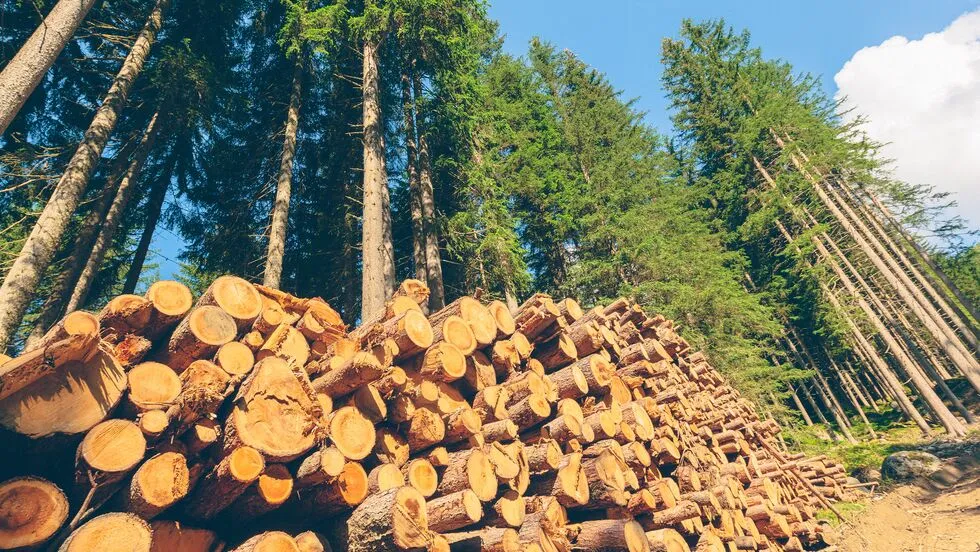
Timberland REITs specialize in owning timberlands and harvesting and selling timber for lumber products through their taxable subsidiaries. Timberland REITs support climate solutions for decarbonizing the real estate sector by supplying wood-based construction materials, which absorb and store carbon during growth, offering a lower-carbon alternative to more emissions-intensive materials like concrete and steel. They also provide carbon capture and sequestration opportunities for companies and other organizations looking to meet net-zero commitments.
Timberland REITs became its own property sector in the FTSE Nareit All REITs Index in January 2011. Over the last decade, timberland REITs have slowly consolidated, dropping from five REITs in 2016 to two REITs following a merger of equals earlier this year. The two timberland REITs currently have an equity market capitalization of nearly $23.5 billion and both operate wood product manufacturing businesses in addition to their timber businesses. These REITs own roughly 12.5 million acres of land across 17 different states in the United States, primarily located in the Southeast and the Pacific Northwest.
Kurt Yinger, senior vice president at D.A .Davidson, noted that scale within the sector is important, "not only in terms of the timber REITs themselves, but also from a public equity institutional investor perspective,” he said. Consolidation has led to a focus on larger players who can reinvest in their operations and maintain a competitive edge, he noted.
The timberland sector is heavily tied to home construction, which has experienced rising material and labor costs that have contributed to the housing shortage. Given the need to ramp up home construction to meet housing demand, the timberland sector may receive strong tailwinds in the future. An increase in home construction would likely require a meaningful rise in timber production.
Housing affordability remains a key issue. The number of new homes for sale has been rising steadily since 2022, peaking in January with an inventory of 128,000 unsold homes, but has since declined to 113,000 in August. While new homes are beginning to sell, residential construction is flat in 2026 after declining throughout 2025. New housing starts were also down 1.2% in August on a seasonally adjusted basis, after a month of decline.
Timberland returns have seen modest improvement over last year, but are still down 15.9% year-to-date as of Sept. 30. The sector continues to face headwinds from low wood product demand due to a slow housing market and economic uncertainty. Active managers are decreasing their allocations to the timberland sector. As of the end of the second quarter, active managers’ timberland allocation was 82% of its index weight in the FTSE Nareit All Equity REITs Index.
But despite the pressures facing the sector, Yinger at D.A. Davidson remains positive. “We've seen some pretty meaningful structural supply dynamics on the lumber side that we think are going to support sustained profitability improvement versus the last two to three years, even if housing demand remains lackluster,” he said. Acknowledging that although It's been a frustrating time for timberland REIT investors, “I don't think we should just necessarily toss it aside because of some of the cyclical pressures that we see today,” Yinger added.
- 15,000: The National Association of Home Builders’ September 2026 Framing Lumber Prices publication indicated that the average new single family home uses about 15,000 board feet of lumber.
- 7.6 billion: Research published in Nature Climate Change shows that forests absorbed a net of 7.6 billion tons of carbon dioxide per year from 2001 to 2019.
- $8.76 billion: According to the USDA, the U.S exported $8.76 billion worth of forest products in 2025.
Sector Spotlight
- Constituents: 2
- One-Year Return: -19.9
- Three-Year Return: -10.3
- Five-Year Return: -7.1
- Dividend Yield: 4.8
- Market Cap: $19.17 billion
- Dividends Paid (2026: Q2): $230 million
- NOI (2026: Q2): $579 million
Source: FTSE, Nareit REIT Industry Tracker As of Sept. 30